 Powered by SlotsReach.com
the single-spin bottleneck
Pragmatic Play’s Wonders of Aztec is a polished 6×5 scatter-pays layout with a 96.55% return and a 10,000x maximum win. But the paytable doesn’t get anywhere near that figure. The best symbol on the board, a gold jaguar mask, pays 100x for a cluster of twelve. The lowest of the nine shapes pays 0.2x for eight. The entire distance between that baseline and the cap relies on a single mechanic: a sun-disc bomb that drops onto a reel, applying a 2x multiplier that doubles with every subsequent bomb. When a tumble sequence ends, the slot adds the standing multipliers together and applies the sum to the win.
In base play, that multiplier row clears between spins. Because a bomb only works if it lands alongside a win, a grid heavily lit up with a cluster often settles for a fraction of the stake.
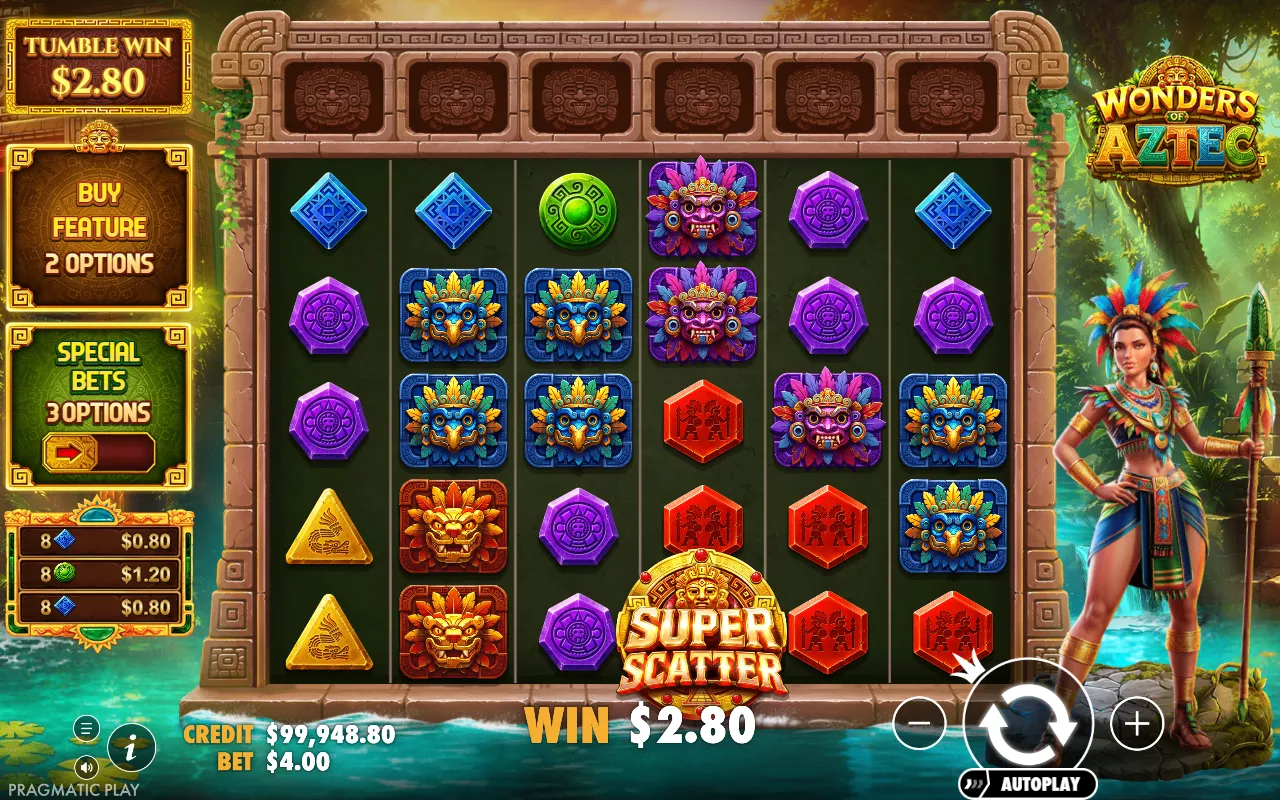
A 0.2x eight-of-a-kind sitting under a 2X and an 8X bomb turns into 2x. That’s ten times the raw win, but still barely double the stake.
The base game is fairly brutal over a short stretch. A run of twenty-five spins will likely see only four pay anything, returning under a fifth of what went in. The studio puts the hit rate at roughly one spin in four, so the dry patches are part of the math. Two different scatters can sit on the same matrix, but below four, the game gives neither a payout nor a tease.
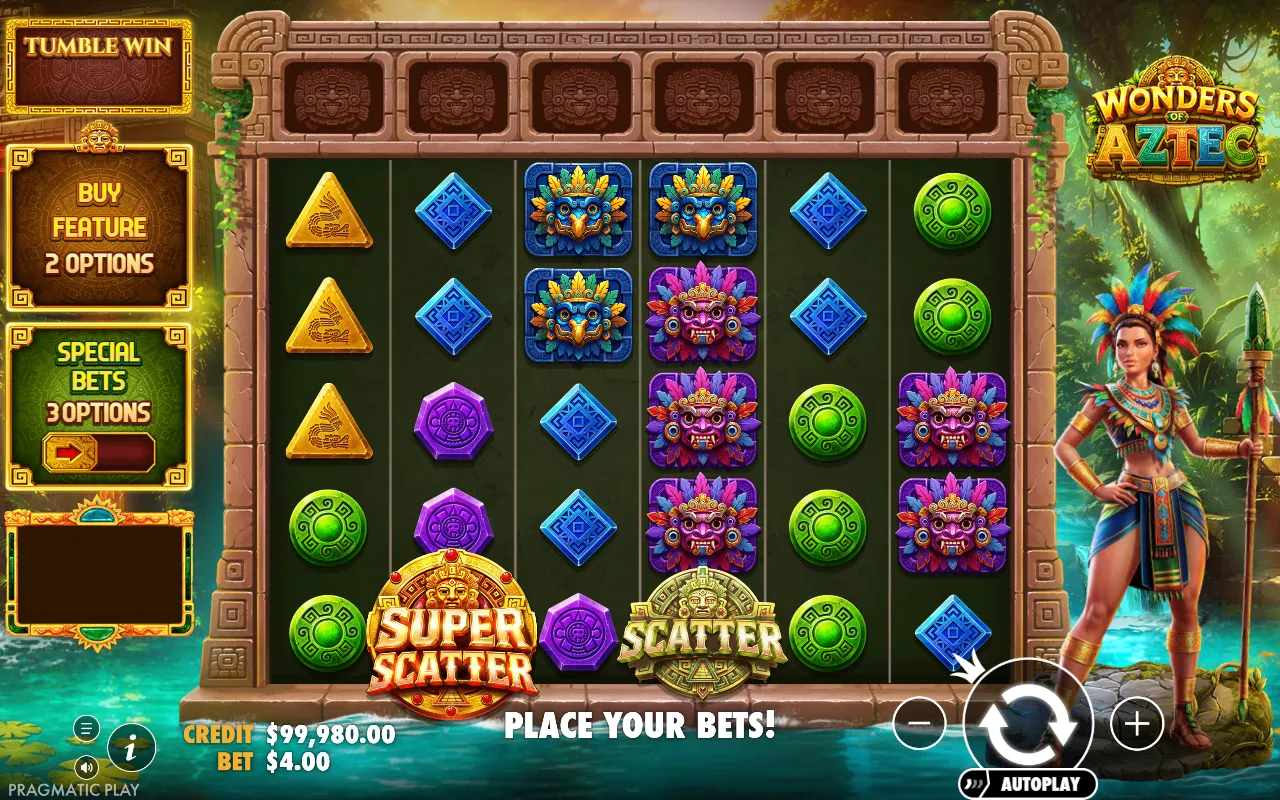
Three scatters do nothing at all, no pay, no consolation, and thankfully no slow-rolled sixth reel selling a fourth that isn’t coming.
the persistent multiplier and its limit
You need four scatters to trigger the free spins. Free spins change nothing about the grid or the cluster sizes. The single difference is that the multiplier row keeps its values from spin to spin, allowing bombs to accumulate up to a 128x cap over a reel.
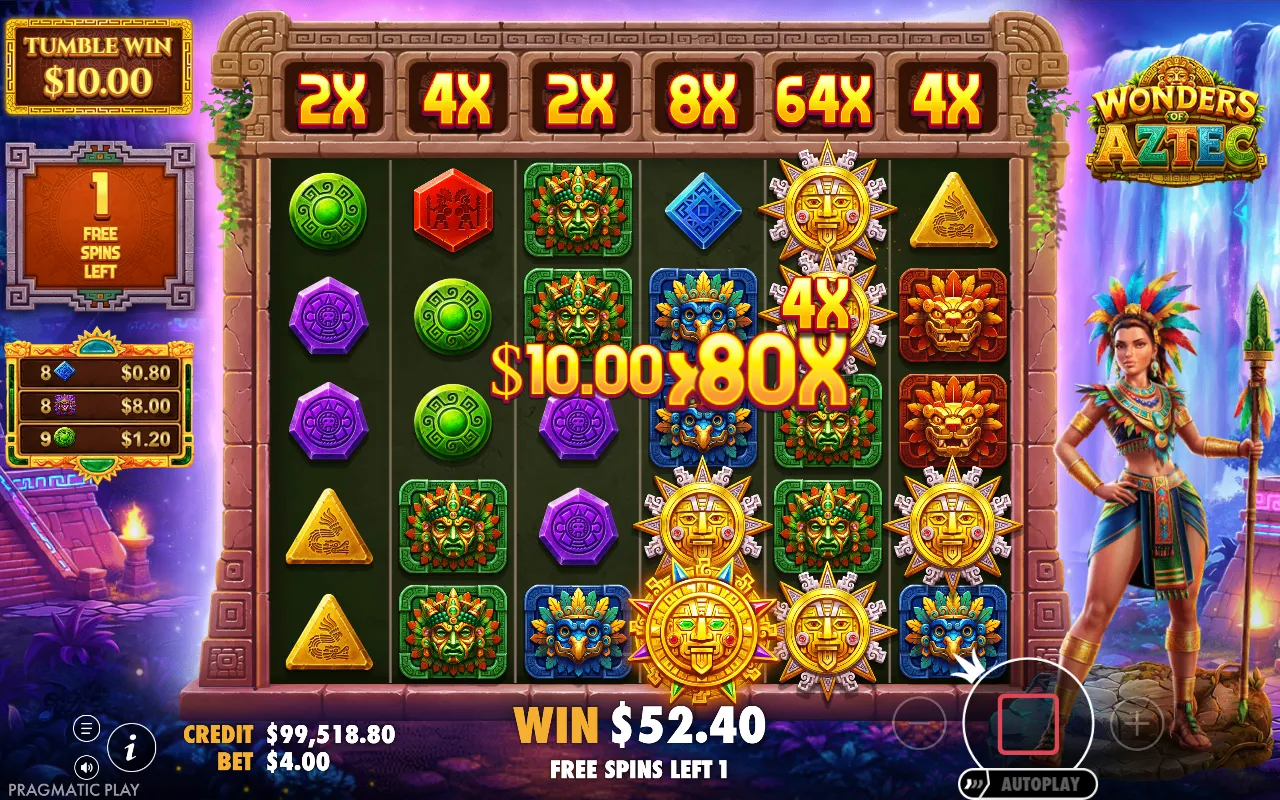
But the structural limit hits hard. A standing multiplier only applies on a spin where a fresh bomb actually lands. You can have six massive multipliers sitting over the layout, but a bomb-free spin just pays its flat face value, which on this paytable is usually next to nothing.
So the round is really a wait for one loaded spin. Taking the 100x free spins buy routinely reveals a sequence where the first nine spins pay barely a tenth of the price between them, before one late spin tumbles under a row worth dozens of times the win and drags the whole round back over its purchase price on its own.
The 500x super free spins buy works the same way, but the red-and-gold super scatter pre-loads the row with bombs before the first spin. Even at that premium, the shape of the round is identical. A 500x buy can produce a massive sequence of eight tumbles and a retrigger, turning a modest run of raw wins into nearly the whole round, and then go completely quiet. Eight of the remaining thirteen spins will likely pay nothing at all because no bomb drops to activate the standing multipliers. The round limps home at 640x, barely a quarter over its price. In both bonus tiers, a single tumble sequence holds somewhere between 94% and 96% of the money.
paying for the bomb instead of the win
The special bets menu is where the layout gets expensive and somewhat predatory. Super Spin 2 costs three hundred times a normal spin, guarantees a bomb, and draws its opening multiplier from a ladder that runs up to 1024x. Both this and the cheaper 10x mode lock out the free spins trigger entirely. You’re paying the highest price the slot charges for a mode that can’t reach its own feature.
Because the guarantee covers the bomb rather than the win it needs, buying a 300x spin can easily drop a 4X bomb over a reel with no cluster underneath it, wiping out the entire stake instantly. The 34x maximum win printed for this mode is just the standard 10,000x cash cap divided by a stake three hundred times larger.
The ante bet is a more sensible route, charging 5x the stake for a trigger chance the game puts at sixteen times higher, dropping the return slightly to 96.51%. The buy options sit level with base play, so purchasing the bonus gives nothing away, making the choice between the 100x and 500x tiers purely about the swing. But that 96.55% baseline is just the top of an operator ladder. The release also ships at 95.57% and 94.55%, and finding the lowest setting isn’t a theoretical risk. Kingdom of Atlantis, the same 6×5 tumbler from the same studio, routinely runs at 94.50% in the wild.
the catalogue context
The medium volatility badge is fairly accurate for what the math does. The studio puts the 10,000x cap at one in 15.7 million spins, which makes it a reachable peak rather than a marketing fiction, though a realistic good day tops out in the 1,000x range.
Against the studio’s massive back catalogue, it’s a sturdy middle entry. It carries a higher cap than Moon Rush at 5,000x on the same board, and a lower one than Gates of Olympus 2500 at 25,000x. On figures alone, there’s little to separate it from Fury of Anubis, which shares the same 10,000x cap, medium badge, and a near-identical 96.52% return. Even 2023’s Gates of Aztec uses the exact same theme on the same tumbling layout, though with a smaller 5,000x cap. Wonders of Aztec earns its place on the summed-multiplier mechanic rather than the theme, delivering a model that can genuinely turn a tiny run of tumbles into a couple of hundred times the stake, provided you can survive the wait for that one spin.