
 Powered by SlotsReach.com
the 250x lid on a 30,000x heist
Play’n GO’s Piggy Heist II sits on a rather strange contradiction. It advertises a 30,000x top prize, yet the Hold’n Win feature that serves as its centerpiece is aggressively capped at a fraction of that. The studio has pushed out 17 hold-and-win designs in 2026 alone, making this release the fourth in ninety days alongside titles like Three Pots of the Genie and Chunky Carlo’s Money Mania. But this specific slot builds its tension around a gamble that simply won’t pay out anything close to the headline figure.
base game and the safe
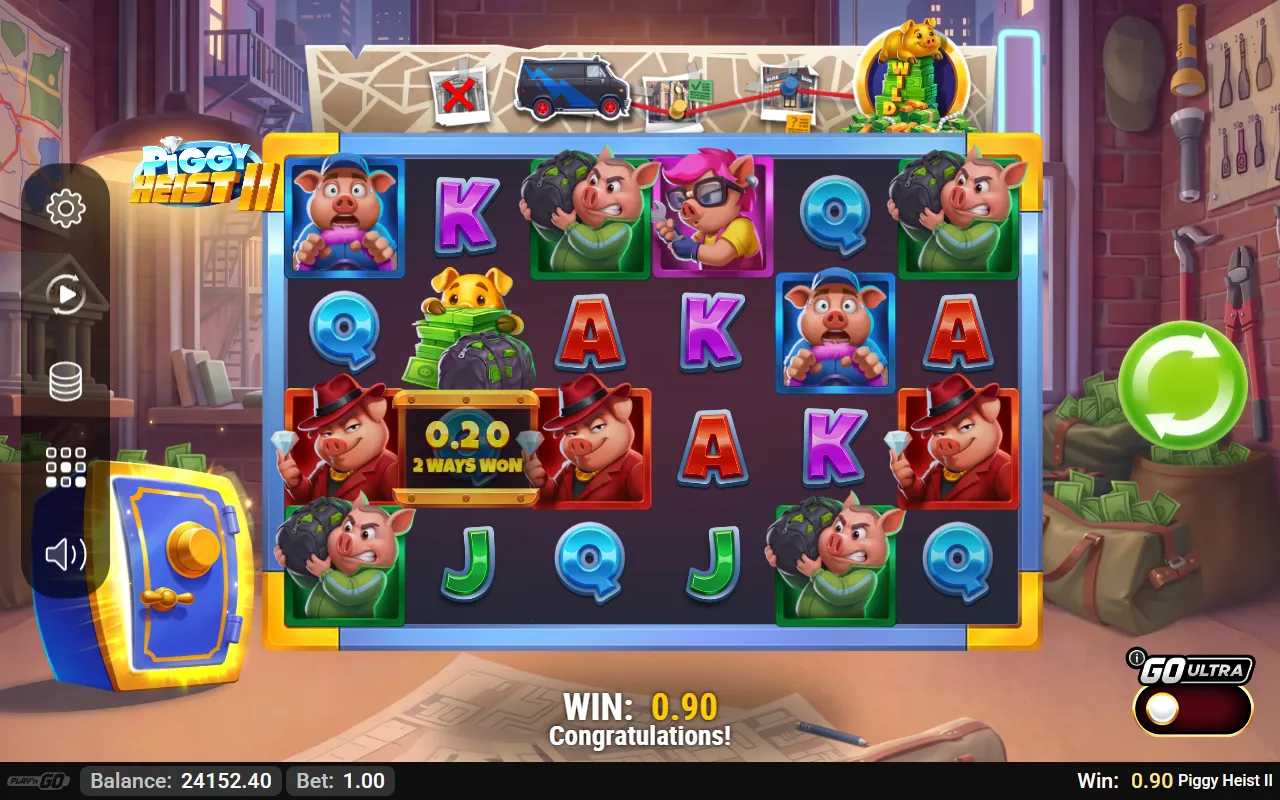
The 6×4 layout uses 4096 ways to pay, but the paytable is flattened to the point of irrelevance. A full six-of-a-kind line of the top pig symbol pays just 5x the bet, and a line of royals pays 1x. Because of this, ordinary symbol hits routinely return less than the stake, and the board will happily congratulate a 0.9x payout as if it’s a jackpot.
The real base game currency comes from coins carrying values from 0.5x to 25x. A Coin Pouch on reel one or six collects them, and two pouches collect them twice. When no pouch lands, the coins are collected by a Safe beside the grid. The Safe grows larger as it collects, giving the impression that a trigger is approaching, but it’s a purely cosmetic trick. The Hold’n Win triggers randomly off a collected coin, with no threshold to reach.
the vault trail and its wilds
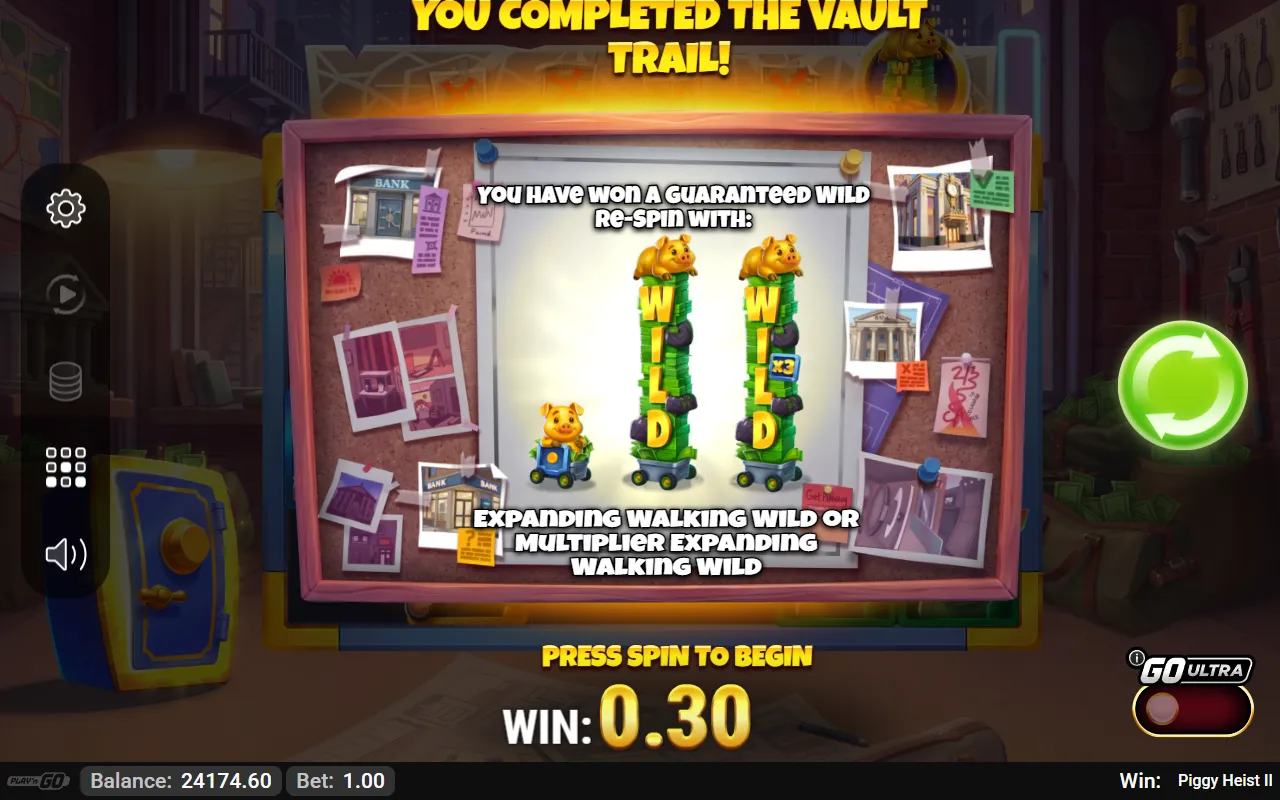
Above the reels sits the Vault Trail. Collecting five Vault Door scatters completes it, awarding a free re-spin with one of three special wilds. The Chobby wild fills a reel for three re-spins. The Walking wild steps one reel to the left per re-spin until it falls off the board, meaning a landing on the second reel gives it just one step, while a full ten re-spins requires it to drop on the far right. There’s also a Mega 2×2 wild.
These wilds land with a multiplier tag of x1, x2, or x3, making the x1 pretty useless. The trail is quite active, completing roughly twice every thirty rounds, and a completed trail hands back a couple of dozen spins’ worth of stake for nothing. It is a steady drip of balance maintenance while you wait for the main event.
playing the bonus blind
The Hold’n Win takes around seventy spins to trigger. It plays as a standard sticky-coin setup on an empty board, where landing a coin resets the counter to three and a blank spin costs one. Coins carry values up to 30x, but they land face down and stay that way until the round concludes.
This is a tidy piece of tension design. You play the entire round completely blind, unable to tell if you’re holding pocket change or the top coins. A feature that fills most of the board with coins can still flip over into something ordinary, and you have no way of knowing which until it does.
the gamble and the missing max win
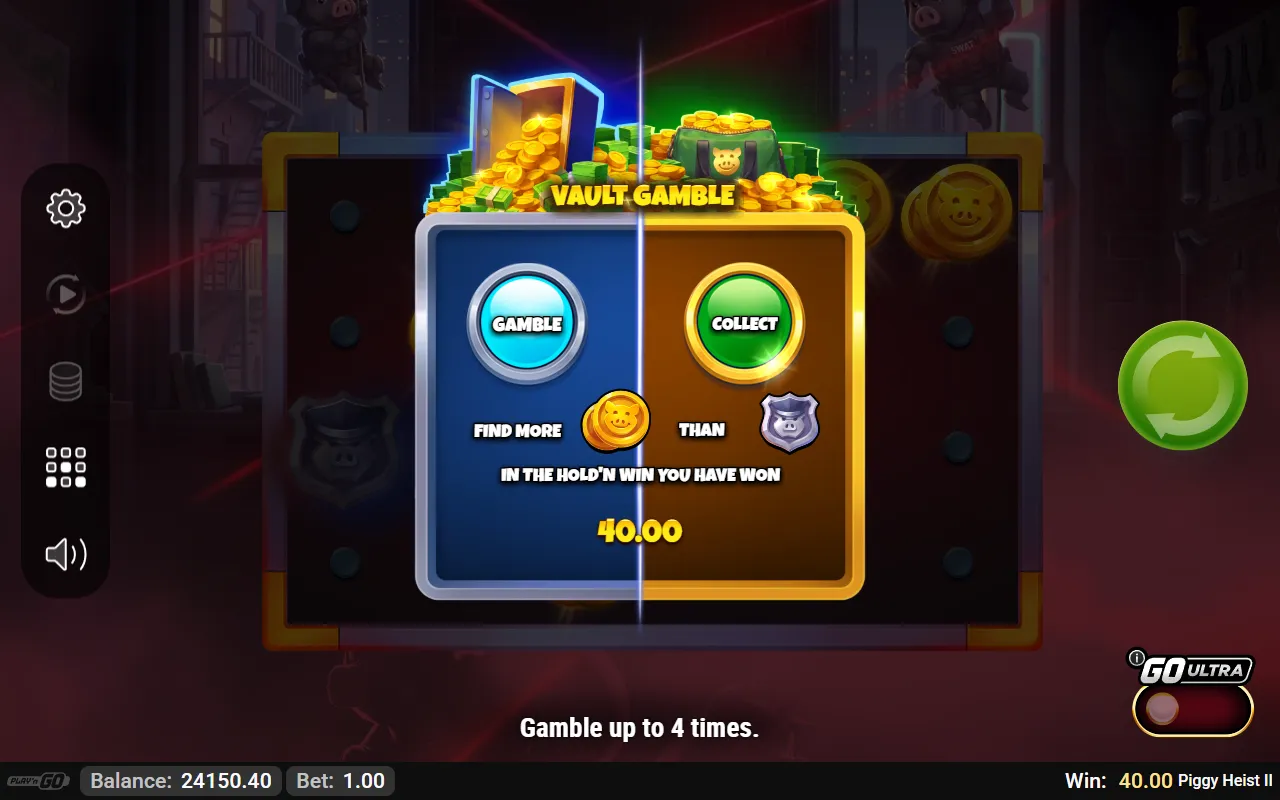
Once the coins flip, the total goes to the Vault Gamble. You can collect the payout or put it all on a 50/50 coin flip to double it. The flip can be taken up to four times, but it enforces a hard limit at 250x the bet on every flip. Doubling a small feature total on one flip is often the best thing that happens in an evening, and the flip is at least an honest one, which is more than most gambles on a reel set offer.
But that hard cap exposes the reality of the math model. A slot advertising a 30,000x top prize shuts down its own main feature at 250x. The actual max win is buried in the base game, relying on multiplier wilds passing values to each other alongside a board full of 25x coins collected twice. A 30,000x hit is a reachable target in this market, and Money Train 5 runs the same sticky-coin respin under a 100,000x top prize, but burying the payout entirely outside the feature you spend seventy spins hunting makes this bonus feel like a decoy.
paying for the ultra switch
The GO Ultra switch beside the reels acts as an ante bet. It raises the stake by half, so a 1.00 bet becomes 1.50. In exchange, it doubles every coin collection, makes the pouches collect twice, and doubles all Hold’n Win payouts. It doesn’t boost the symbol payouts, but those weren’t paying anyway.
The problem lies in the pricing structure. The 30,000x top prize only applies to normal bets. Turn on the GO Ultra premium, pay half again for the privilege, and the game refuses to tell you what the new top prize becomes.
a shrinking lineage
Piggy Heist II is built on borrowed math. It’s a direct copy of Crabby’s Gold III, a medium-volatility slot from a few months prior with a 31.15% hit rate and a 35,000x top prize. The pigs add a wider wild roster and the GO Ultra switch, but they strip away the top end. Crabby’s Gold II boasted 70,000x, and the original Piggy Heist advertised 70,000x too. This design has now been sold repeatedly, with the max win shrinking every time.
The 250x limit on the Vault Gamble is the most honest number here. The trail re-spins and the occasional doubled bonus make for a perfectly playable slot with sharp art, returning small, repeatable sums. But running a 96.22% RTP through a recycled math model that cuts its predecessor’s top prize by well over half leaves the whole heist feeling a little small.
