 Powered by SlotsReach.com
the missing return
Pragmatic Play and Reel Kingdom have dressed a familiar math model in a purple suit. Gameshow Party Jackpot Play is a high volatility online slot built on the bones of Big Bass Splash. It keeps the same collector wild, the same free spins ladder, and the same 5,000x max win. But the price of admission has changed. The return drops to 94.60%. That missing math pays for four progressive jackpots sitting above the reels. And in free play, those pots display XXX and take 0% of every bet. You’re paying a heavy premium for a prize you can’t even price.
dead money on the grid
The base game operates on ten lines, and they barely matter. A sports car pays from a pair, while landing three of any royal symbol returns a fifth of the stake. A typical line hit on the grid will likely top out around 2x. Instead of line wins, the board constantly drops money symbols, and their ladder climbs from 2x to the game’s entire 5,000x ceiling on one symbol. Because there are no wilds in the base game, these cash bundles are entirely inert. A dead spin is quite common. It feels distinctly worse when the layout is covered in eight cash prizes that do absolutely nothing.
It usually takes around thirty spins of watching untouchable money land before three scatter stars finally trigger the bonus. Landing two stars triggers a chance at a respin or a reel nudge to find the third, but the grid frequently skips the rescue entirely and moves straight to the next bet. Turning on the ante bet costs 1.5x the stake, adding more stars to the reels while disabling the buy.

lighting up the pre-round
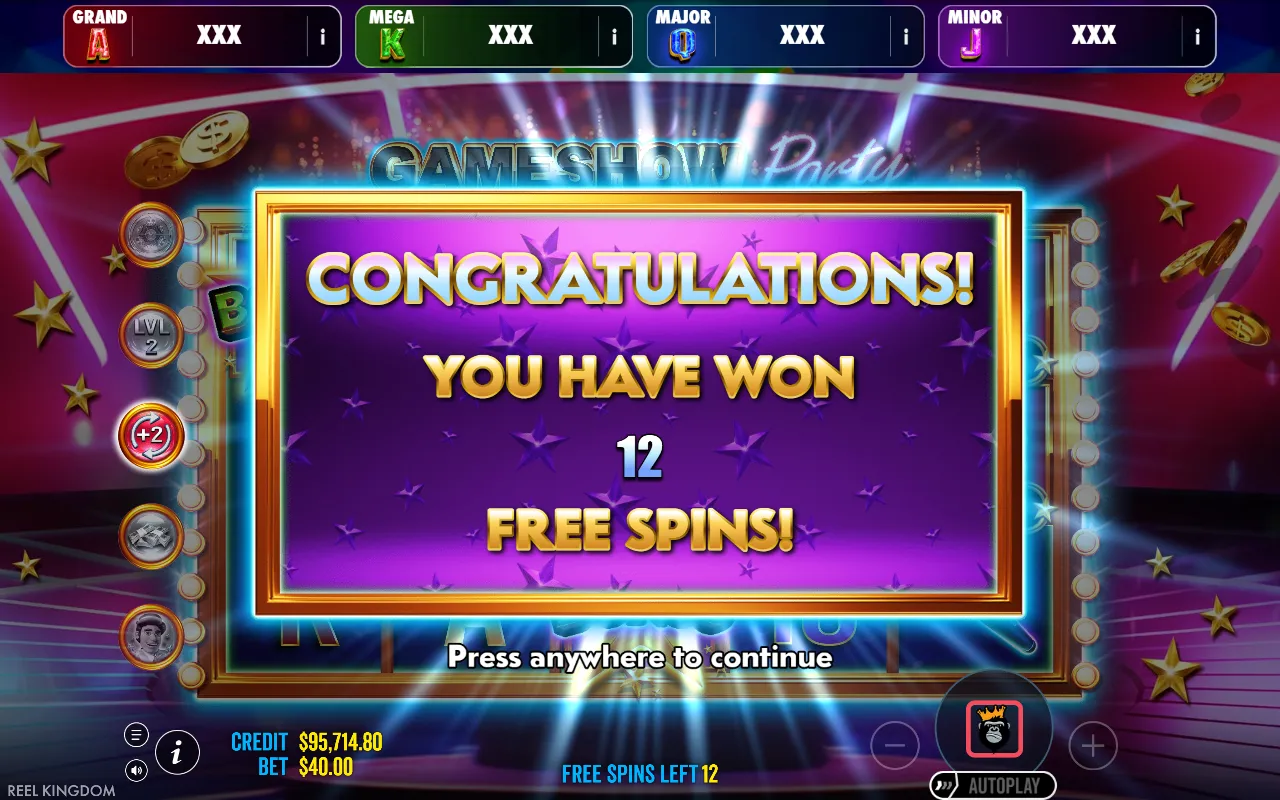
Before the free spins begin, the reels vanish and a lit gameshow board takes over. A draw selects from panels offering MORE HOSTS, MORE CASH, MORE WHEELS, START AT LEVEL 2, +2 SPINS, or PLAY AGAIN. Hitting the last one grants another pick, meaning a round can start with a handful of modifiers or absolutely none at all. It’s a genuinely entertaining sequence and the one place the release actually earns its theme. It also dictates the financial reality of the round more than anything that happens on the grid afterward.
climbing the multiplier
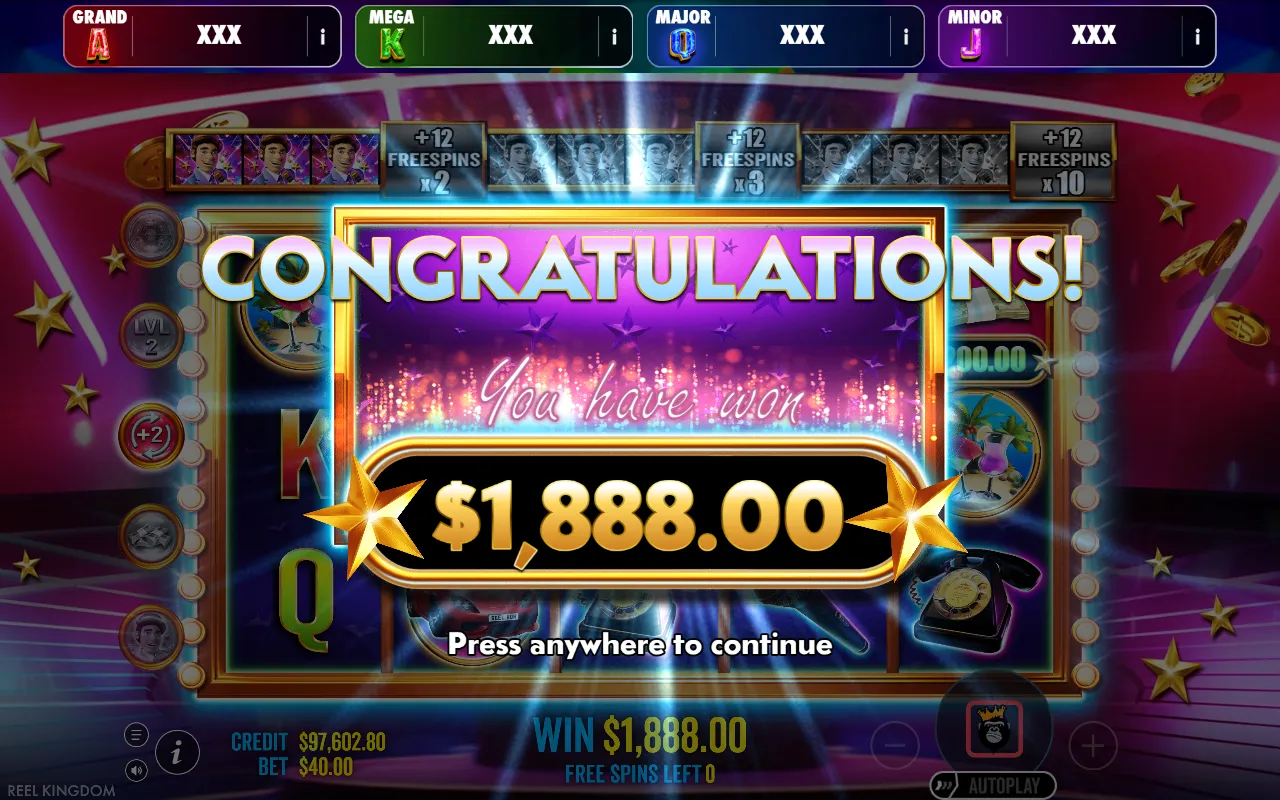
The free spins run on a familiar collection track. Each host wild collects every money value on the board. Every fourth host adds ten spins while stepping the multiplier up to 2x, then 3x, and finally 10x. Getting to that top tier requires twelve hosts. The reality of a ten-spin round is that it will routinely stall at three hosts, leaving the multiplier stuck at 1x from the first spin to the last. A natural trigger that brings a couple of modifiers from the pre-round board will often limp back with less than 20x the bet.
Paying 100x for the buy doesn’t guarantee a better setup. The purchase randomises the scatter count, meaning you can easily pay full price for the baseline ten spins. A bought round that draws no extra modifiers from the board will generally return around a third of its cost. Pulling extra spins from the pre-game can push that return closer to half the buy price, mostly off the back of a single host landing next to a layout full of cash. The 5,000x max win is a standard target for the genre. But reaching the 10x multiplier that would actually unlock it is quite rare.
pricing the pot
The four jackpots trigger randomly after a base game spin through a matching pick game. Because those pots are blacked out in demo play, the only verifiable figure is the 94.60% return. That number is remarkably low. This isn’t an isolated drop. Kingdom of Atlantis and Lotus Treasure – Oranje Jackpot both share the same jackpot structure, the same 5,000x ceiling, and similarly punishing returns in the mid-94% range.
A 94.60% return buys the Big Bass Splash bonus with a flashy pre-round board attached. And while that board is pretty solid, the rest of the slot is a familiar grind stripped of its math to fund four progressive pots you can’t verify. Big Bass Splash offers the exact same collector mechanic and max win at 96.71%. Taking the original for the return alone is the only logical move.