
 Powered by SlotsReach.com
Relax Gaming famously retired this franchise in 2023, only to bring it back to life. Money Train 5 arrives on 24 September 2026 as a 5×4 game with 40 fixed paylines, running at 96.10% and capped at 50,000x your bet. Volatility is high, exactly as fans of the series have come to expect. The base game serves mostly as a waiting room; everything worth chasing is locked inside a complex free spins round driven by tickets, stations, and a colorful cast of characters. If you don’t feel like waiting, a purchase menu offers six different ways to skip straight to the action.
The base game and its one wild
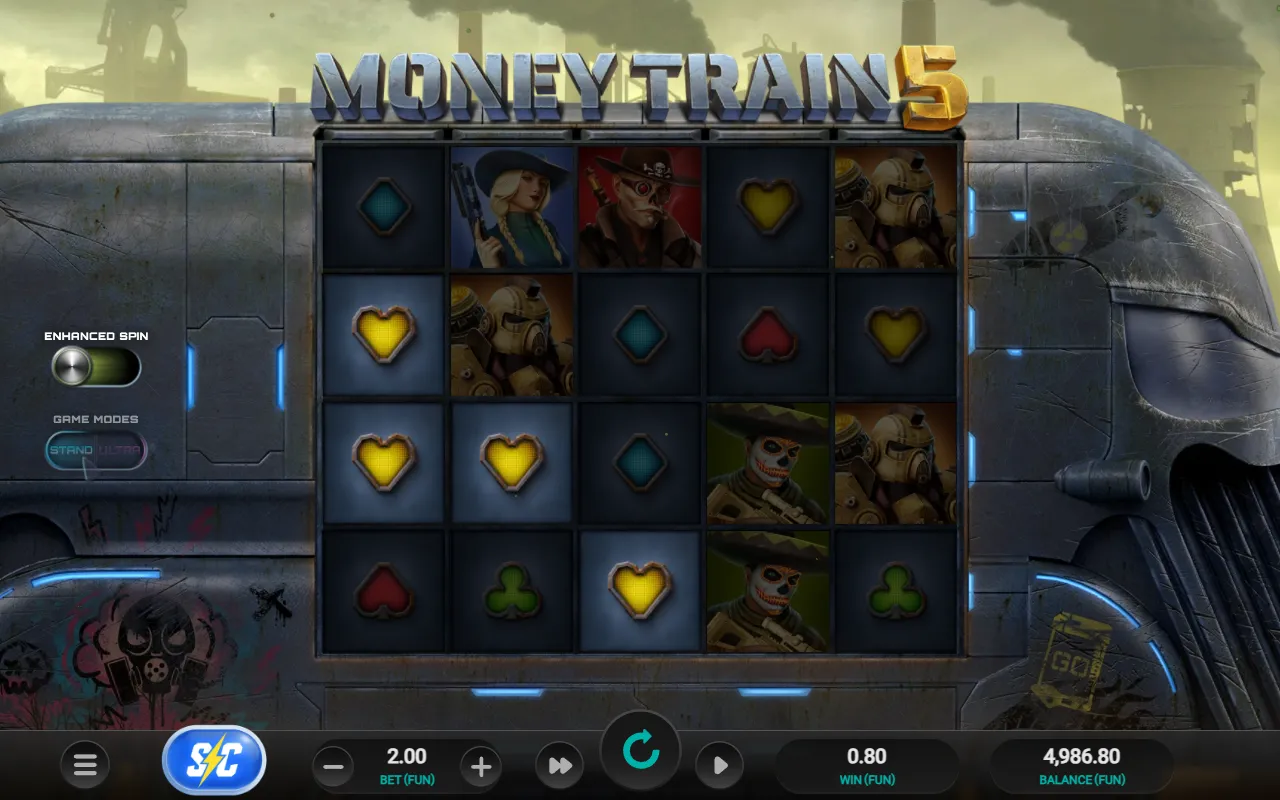
Wins land the traditional way, requiring three or more matching symbols across one of the 40 line paths from left to right. Four metal-framed card suits make up the lower pays, while four painted characters handle the premiums. The best of the bunch is a cigar-chomping man in a bowler hat, paying 20x for five in a row. A wild symbol pays that exact same 20x and steps in for everything except the bonus symbol. On a game with a 50,000x ceiling, a 20x top line makes it clear that the big money is hiding elsewhere.
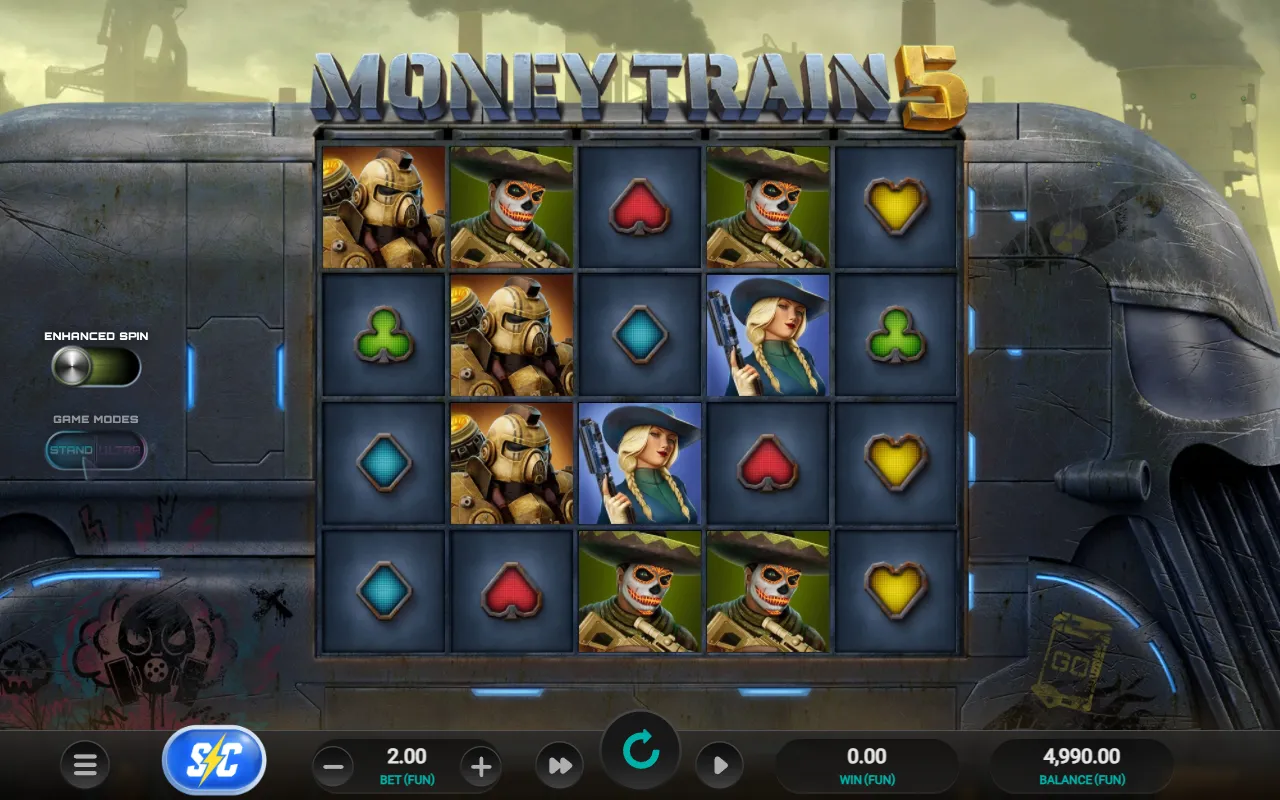
My time in the base game was mostly quiet. Hitting a left-to-right combination feels unforgiving when the premium gunners and mariachis drop into the wrong columns. A short stretch of play handed me just a single win, a pair of lines made of yellow hearts that gave me 0.80 back on a 2.00 stake. The rest of the time, I was just looking at boards full of characters that failed to connect.
The one mechanic designed to rescue a quiet spin is the Nuclear Wild. Crosshairs lock onto up to five reels and plant bombs across them. If a bomb becomes part of a winning combination, it detonates into a full reel wild four positions tall. However, bombs that fail to connect simply sit there, leaving the spin to pay zero anyway. It never fired during my session, leaving its true impact as a story for another player.
Tickets and stations
Landing three or more bonus symbols opens the main feature. The bonus symbols themselves hold no base value; they cannot complete a line, and landing just one or two on the board does absolutely nothing.
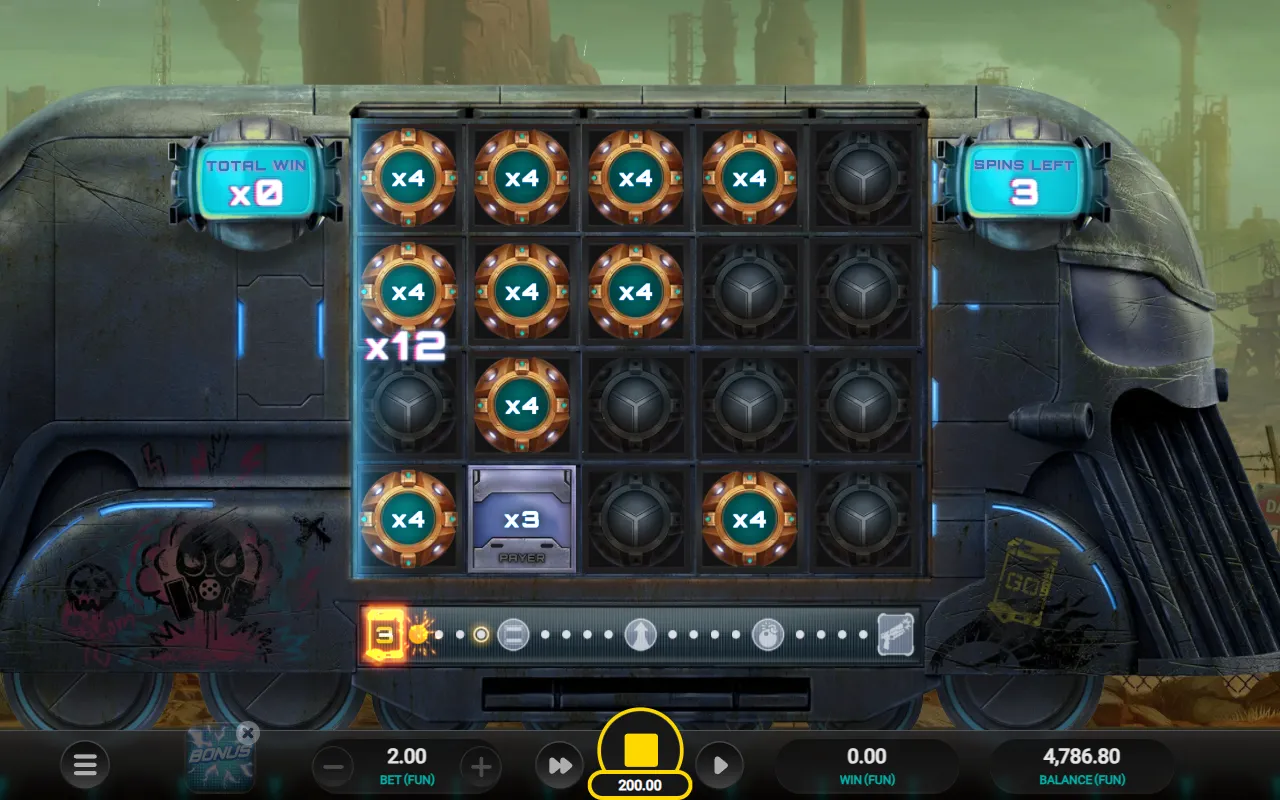
Once inside, you are greeted by the collect-and-stick mechanics that made this series famous, but with a major structural twist: the grid moves sideways. You start with three spins. Every new symbol that lands sticks in place for the rest of the round, resetting the spin counter to three. Values accumulate on the board, and the game only pays out when the round concludes. Plain bonus symbols reveal values between 1x and 10x the bet, but the twelve named characters do the real heavy lifting.
Some characters push their value out, like the Payer, which adds its own number to every symbol on the screen. Others pull value in, like the Collector, sweeping up all visible numbers and adding the total to itself. The Sniper doubles between three and eight values, and is even allowed to hit the same target twice. The Arms Dealer transforms up to four plain bonus symbols into feature symbols, while the Necromancer brings one or two previously used special characters back to life.
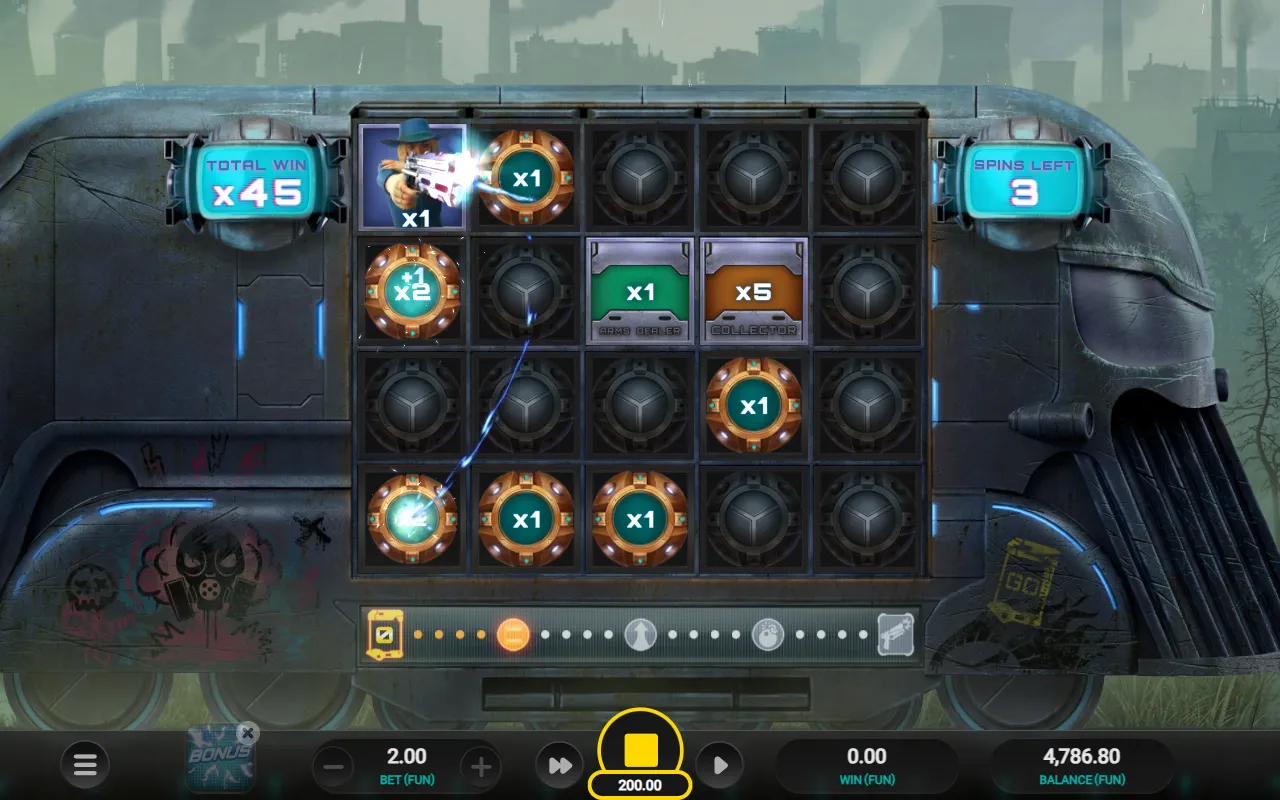
A subtle but crucial rule dictates how these characters behave: they act in reading order, from top to bottom, left to right. Where a character lands changes the entire trajectory of the round. A Sniper acting before a Payer creates a vastly different outcome than a Sniper acting after one. The Permanent Payer always goes second to last, and tickets act last.
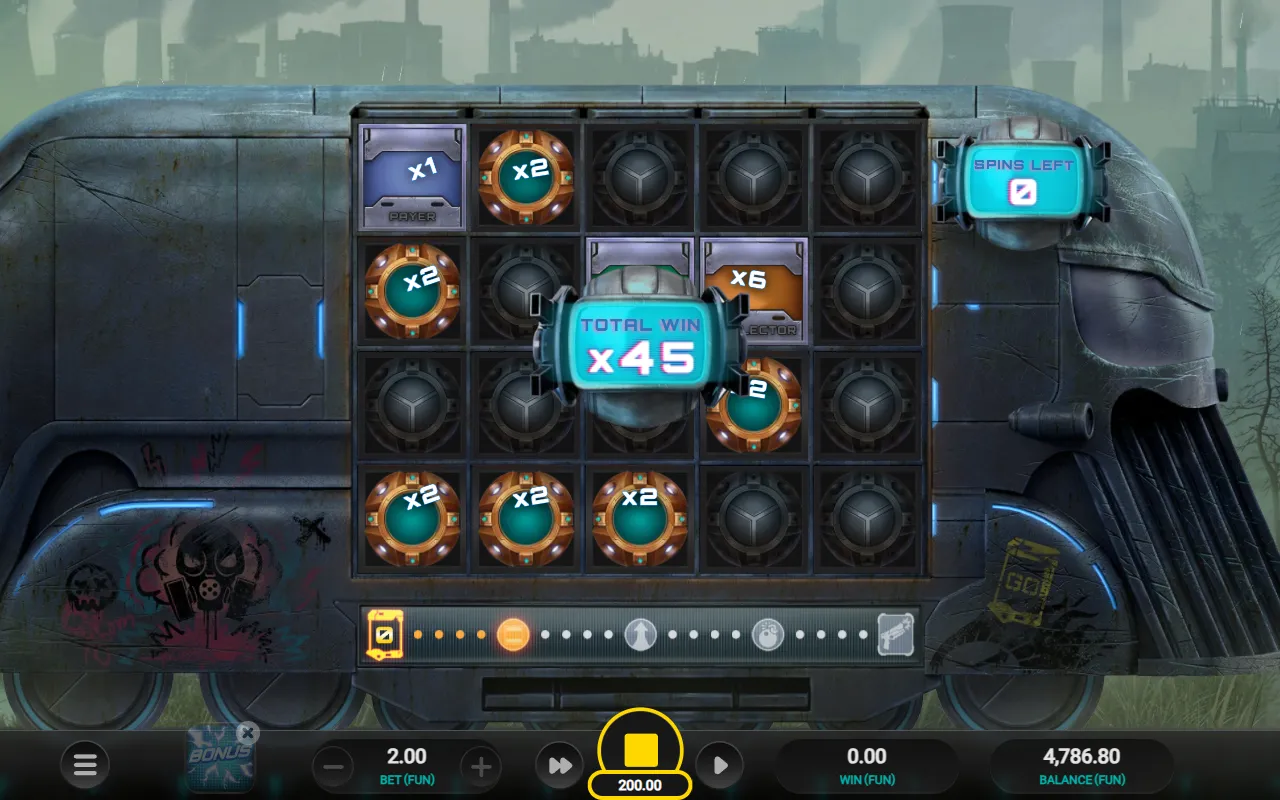
Those tickets are the other half of the engine. The number printed on a ticket dictates how many reels the grid shifts to the left. Every reel pushed off the edge advances the train one station, dropping its accumulated values into your running total. But this movement is a double-edged sword. If a Collector has been building up massive value on the leftmost reel, it eventually falls off the edge. You still get the money it collected, but the symbol doing the work is gone.
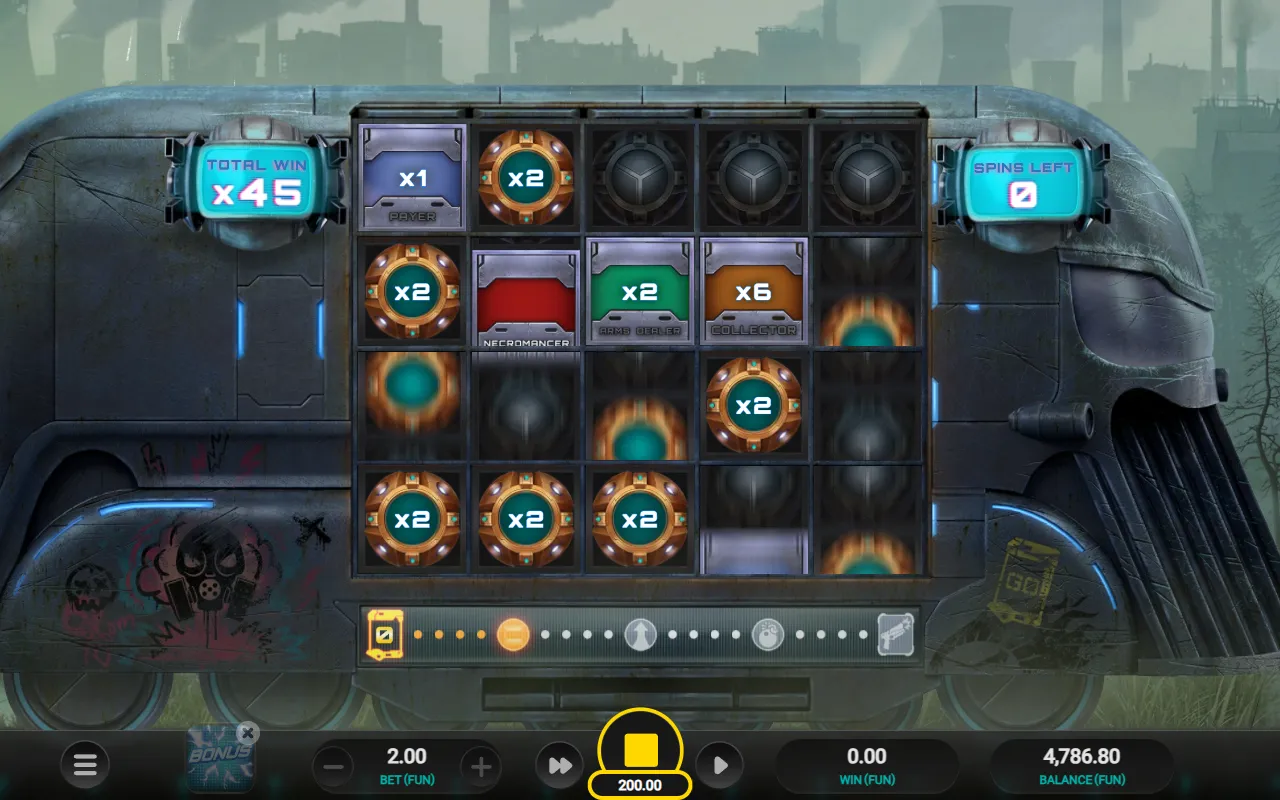
When the board runs cold and three spins pass without a new symbol, the round ends quietly. One of my runs ended exactly like this, banking just 45x with a Collector stuck at x6 when the counter hit zero.
The station ladder
The stations are the real objective here, capable of turning a tedious round into something frightening in just two spins. Reaching station 5 unlocks persistent symbols, allowing them to activate their effects on every single spin instead of just once. Station 10 adds a fifth row to the grid. Station 15 introduces the Bomber, which multiplies every value on the board by 2x to 5x, and the Pyromancer, which creates a hot zone where values double upon arrival. Finally, station 20 awards the Permanent Payer.
The only way to advance the train is by using tickets to push reels off the grid, moving one station per reel. Because of this, the early stages of a round only feature the weaker versions of the characters. If you never find a ticket, the round never shifts into high gear. During my best attempt, I collected six tickets over eight spins, clearing station 5 before the board went dead.
Six ways to buy in
The purchase menu features four free spins options and two alternative buys. Standard Free Spins cost 100x the bet, Ultra Free Spins are 250x, Super Free Spins run 500x, and Ultra Super Free Spins demand 2,000x. The Super variants are the most intriguing because they drop you straight into station 15 with persistence unlocked, the extra row added, and the Bomber and Pyromancer already active.
The other two options, Bonus Reels for 10x and Ultra Bonus Reels for 25x, are base game spins stripped of all paying symbols. Only bonus symbols and blanks can land, drastically raising the trigger chance. They function more like a cheap lottery ticket than a guaranteed bonus.
Interestingly, all four free spins buys operate at a 96.50% return, which is higher than the 96.10% you get by spinning the reels normally. Usually, hitting a buy button costs you a fraction of the return, but here, it actually hands a slice back.
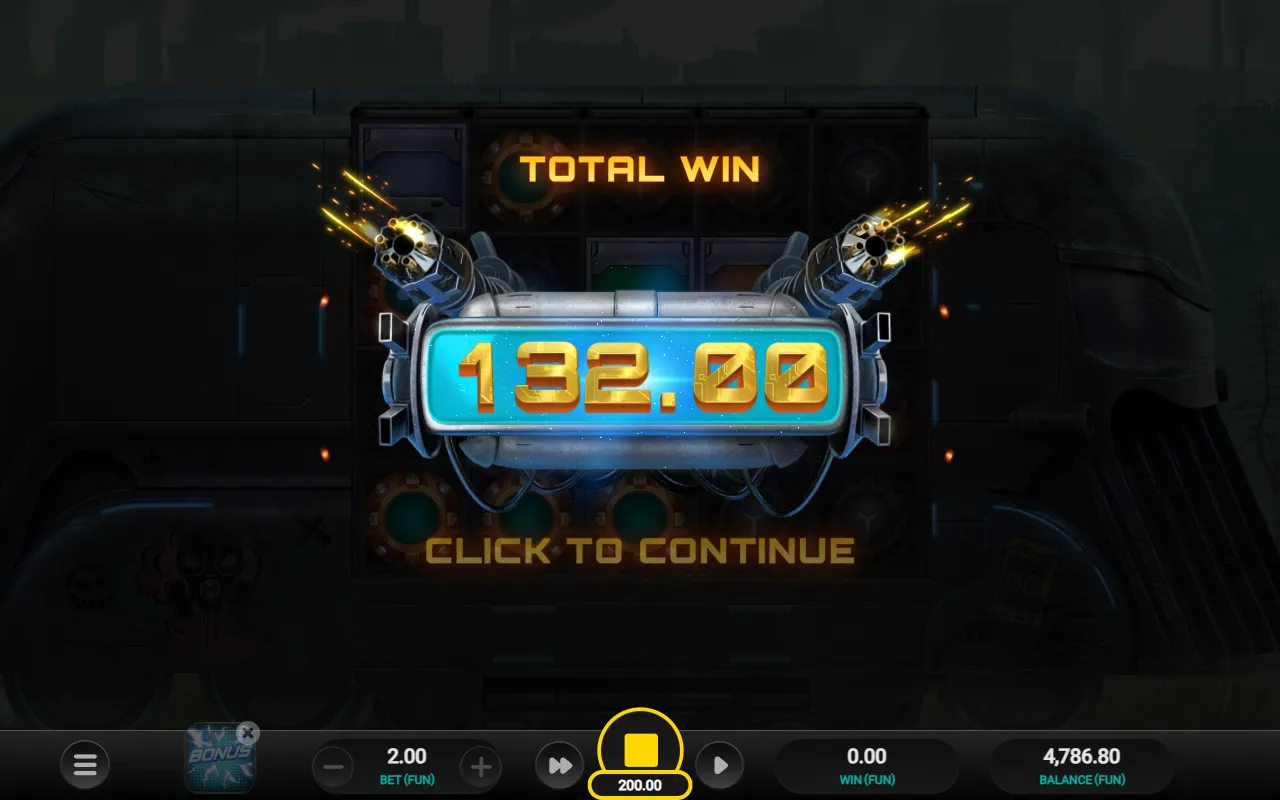
The cheapest 100x buy is still playing for the full 50,000x cap. What you are missing out on is the head start. I bought in three times at the 100x tier, walking away with returns of 66x, 390x, and 97x. Only one of those rounds managed to push past a station gate, making those expensive head starts look quite appealing.
Two ceilings
Ultra Mode is a simple toggle on the left side of the base game screen, and it costs nothing to activate. Your stake remains the same, the RTP stays locked at 96.10%, and the maximum win doubles from 50,000x to 100,000x. Every purchase option in the menu also gains an Ultra counterpart at a higher price.
These ceilings carry a lot of historical context, as this series has always been a story about numbers going up. The original game topped out at 20,000x. Money Train 2 hit 50,000x, Money Train 3 doubled that to 100,000x, and Money Train 4 pushed all the way to 150,000x before supposedly retiring. This fifth installment dials the standard game back to 50,000x, with an Ultra ceiling that only matches the third game.
How it looks
The grid acts as a cargo door set directly into the side of an armored locomotive, making the reels feel like a physical part of the train. The backdrop is a wasteland of irradiated yellow-green skies, smoking refinery stacks, gas-mask graffiti, and a blunt cannon barrel mounted on the front. The cast has transitioned from Wild West outlaws to post-apocalyptic raiders. The classic bowler hat and cigar remain, but they are now joined by a sugar-skull mariachi with a rifle and a gunner wearing a respirator.
The lower-paying card suits are designed as enameled metal tiles set in bronze bezels, feeling cold and industrial against the warm, hand-painted character portraits above them.
The bonus round is where the visuals truly shine, largely because of how legible it is. The reels darken, values appear as brass coins with cyan faces, and the special characters drop in as colored slabs with their names stamped clearly underneath. The station track runs along the bottom of the screen with icons marking the four gated stops. In a feature where a dozen different symbols act in a strict sequence based on their position, being able to read the board at a glance is worth more than the art itself.
Pros & Cons
What works
- The bonus round offers incredible depth. With twelve characters, four station gates, and a strict acting order, two rounds with the exact same symbols can play out completely differently.
- The feature buys run at 96.50%, sitting nicely above the 96.10% base game.
- The cheapest 100x purchase still plays for the full 50,000x ceiling, meaning the massive potential isn’t locked behind the most expensive tiers.
- The theme and mechanics are perfectly intertwined. Advancing the train with tickets literally unlocks the stations and features.
What does not
- The base game feels like a waiting room, offering a 20x top line and very infrequent wins, leaving the Nuclear Wild as the only real saving grace.
- Dropping back to a 50,000x ceiling after Money Train 4 hit 150,000x feels like a step backward for a series famous for its climbing numbers.
- The sideways-moving grid can pull your best persistent symbol right off the board just as it starts generating serious value.
Verdict
My three 100x buys returned 66x, 390x, and 97x, and only the middle session managed to reach the station gates where the true Money Train experience begins. That essentially sums up the entire game in a single thought. When the special characters align and start feeding off one another, nothing else on the market does it quite as well. The moving grid fundamentally changes how you play, turning travel into a necessary price for every good symbol. But when the board refuses to cooperate, three blank spins end the run in a flash, leaving you with whatever small multiplier happens to be sitting on the counter.
The smaller ceiling is a noticeable shift. A franchise that climbed from 20,000x to 50,000x, then 100,000x, and finally 150,000x feels a bit strange returning to 50,000x. Players who chased the fourth game purely for its massive headline number will find that this version has quietly stepped back two generations. However, if you loved the previous game for the intricate interplay of its bonus features, you will find the absolute best version of that interplay right here, at 100x, with a third of the ceiling attached.