
 Powered by SlotsReach.com
Peter & Sons built Inks & Pints around a leprechaun tattoo parlour, and gave it a 96.7% base return. That’s a high figure for the studio. But the math model has a severe split personality. The splash card advertises a 10,000x max win, which is fairly standard for the market and entirely reachable if the mechanics align. Yet the best five-of-a-kind line on the board pays exactly 10x. Every multiplier between those two extremes is locked inside a four-ring bonus wheel, waiting on a single segment of a single symbol.
a flat paytable and both-ways math
The layout is a 5×3 grid with ten lines that pay from either edge. That sounds generous until you check the values. The four card suits all pay exactly the same 2x for a full line, creating a single flat tier of filler. The premiums top out with Finn Clovercoil at 10x, and that’s the absolute limit the board can reach on any single line.
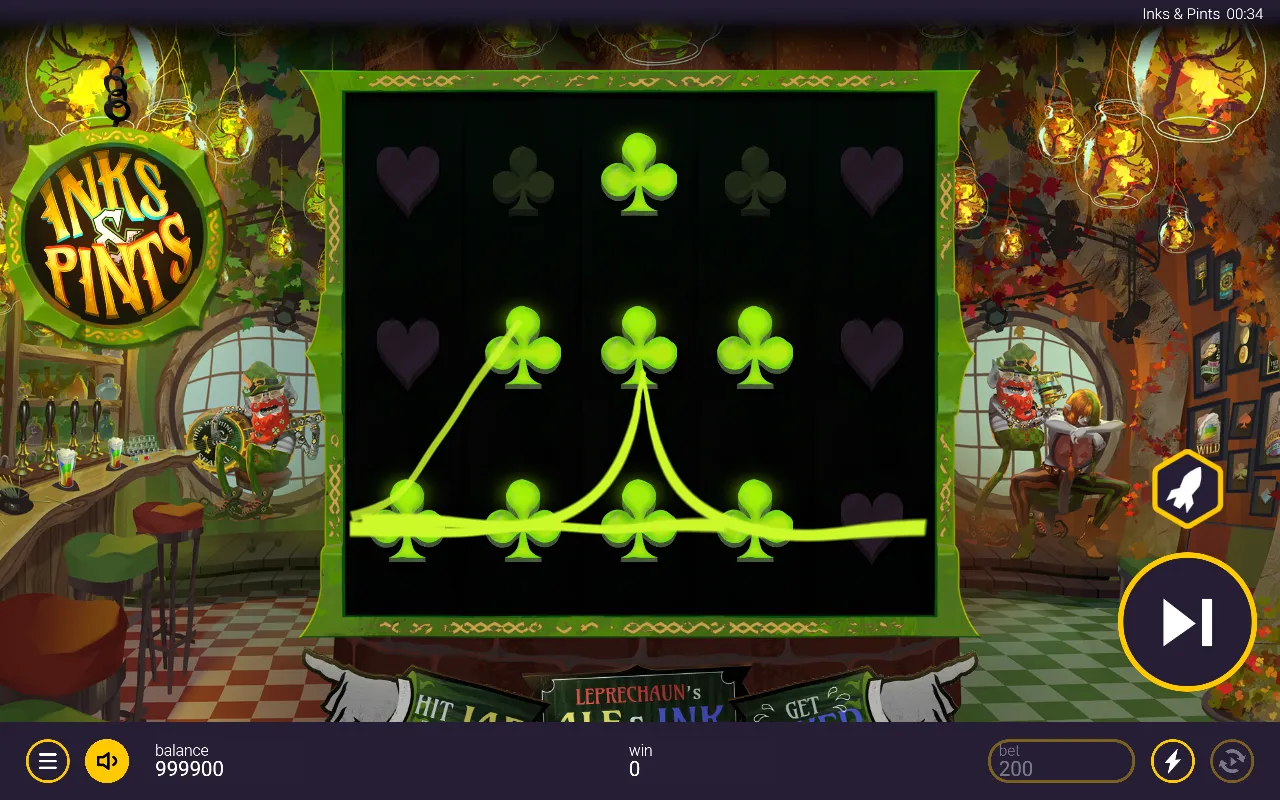
What paying both ways actually does here is multiply the volume of wins rather than their size. A layout flooded with one suit lights up from both edges at once, turning seven intersecting lines of hearts into a combined payout of roughly three and a half times the stake.
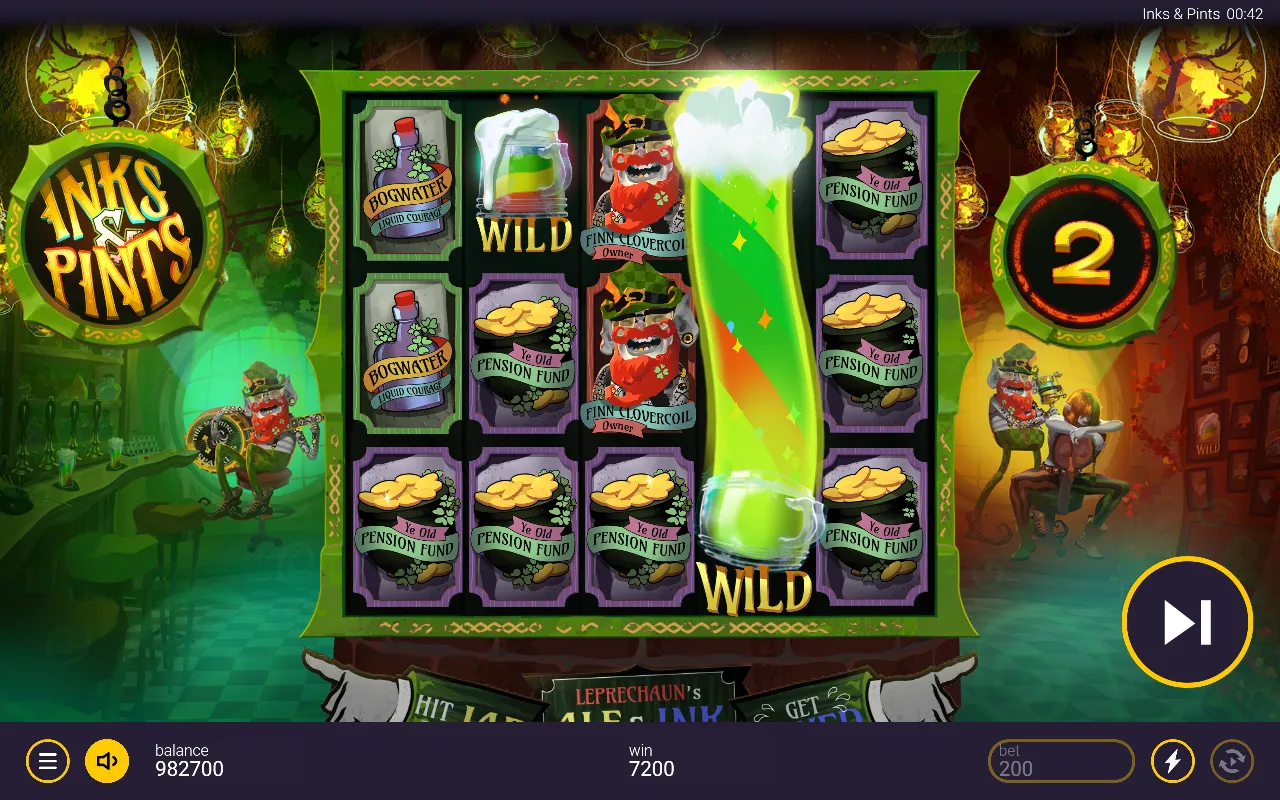
Because roughly one spin in four pays anything at all, and mostly in suits, the balance drifts down slowly. The only break in the pattern is the pint wild. It lands on the middle three reels, expands to fill the column, sticks in place, and triggers a free re-spin of the rest of the board. Catching one is a minor event that might bump the balance by a handful of times the bet, but it keeps the base game moving.
buying pace and hidden toggles
There are two scatters, and they open different doors. Three jars trigger free spins, while three wheel scatters on the middle reels activate the bonus wheel. Neither lands often on its own.
You can force the issue with the Golden Bet, which adds half your stake to the price of a spin for a doubled chance at the features. It pushes the return up slightly to 96.9%. But it also introduces a bizarre interface contradiction. The spin button will charge 300 while the bet readout beside it insists the stake is 200. The balance drops by the higher figure, meaning anyone calculating their win multiples off the bet field will flatter every hit by half.
The feature buys carry their own trap. Both the free spins and the wheel cost 75x, but they’re standing toggles rather than single purchases. Flip one on, and the game charges that 75x premium on every single press until you manually switch it off. A player clicking through a round could easily burn through a balance by accidentally buying a second feature immediately after the first.
free spins and the wheel
Three jars buy free spins, drawing a random count of 7 to 20 spins before the first reel even moves. The round can’t retrigger. Pint wilds can land anywhere now, and they stay locked for the remainder of the feature, but they lose their re-spin ability.
Because the paytable doesn’t increase during the round, the entire value relies on a wild landing early. A 75x buy that draws a dozen spins might catch a wild on the fourth spin and another right at the end, stringing together enough small suit wins to limp back with nine-tenths of its price. Two full wild reels on a 10x paytable deliver a long sequence of moderate hits, not one massive spike.
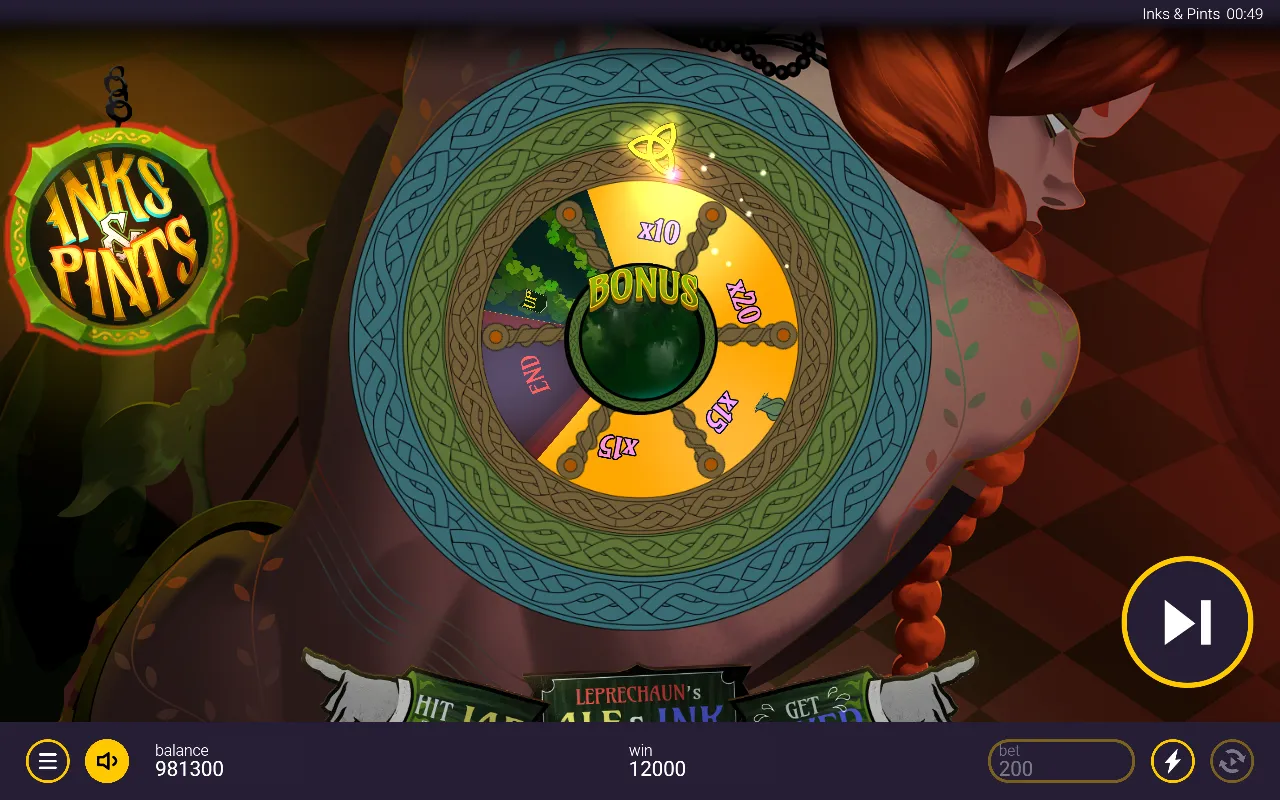
The wheel is where the actual money lives. Three scatters open a four-ring setup. You start on the outer edge, where segments award small cash prizes, advance you inward, or end the round. A cash prize spins the wheel again, so a ring keeps paying until it promotes or ejects you.
The second ring is the bottleneck. It pays 5x to 8x a spin, and a round can easily get stuck there, handing out 6x and 7x over and over while refusing to advance. A round that spins sixteen times might spend nine of them grinding out change on that green ring before finally promoting.
The innermost ring has no exit and no promotion, just three symbols with their own price lists. Bogwater pays up to 100x, the Pension Fund reaches 200x, and Finn Clovercoil holds the 10,000x cap. So a player who never reaches that center ring is playing an online slot where the best single award is 20x. Getting all the way to the middle and drawing the cheapest symbol for 40x pushes a 75x buy just a third over its price, which is likely how most successful climbs end.
the studio shape
The math model here isn’t exactly a secret. Bunny Heist, a release from the same studio earlier this year, shares the exact 96.7% return, the 10,000x cap, the ten both-ways lines, the expanding sticky wilds, and a wheel bonus. A studio doesn’t hit the same five numbers twice by accident. For players who want this specific wheel-and-wilds setup with a slightly better math model, Wincent Wolf from BGaming runs a 97.00% return at the same 10,000x ceiling.
Inks & Pints is a solid, entertaining title with a genuinely pleasant wheel climb. But the financial reality is stark. The base game is a low-paying grind, the free spins rely entirely on early wilds to break even, and the massive max win is locked behind a single segment on a wheel that prefers to hand out pocket change. The 75x buys are mostly paying for pace, skipping the flat suits to get straight to the bottleneck.