 Powered by SlotsReach.com
the gamble sold separately
Playtech, under its LogicLabs mark, has released something that isn’t really an online slot at all. Flip-a-Licious takes the double-or-nothing gamble usually hidden at the end of a bonus round and charges admission to it directly. There are no reels, no symbols, and no theme. You set a stake, pick a coin count of fifteen, ten, five, or one, and flip them. The ones that land your way survive. The rest vanish.
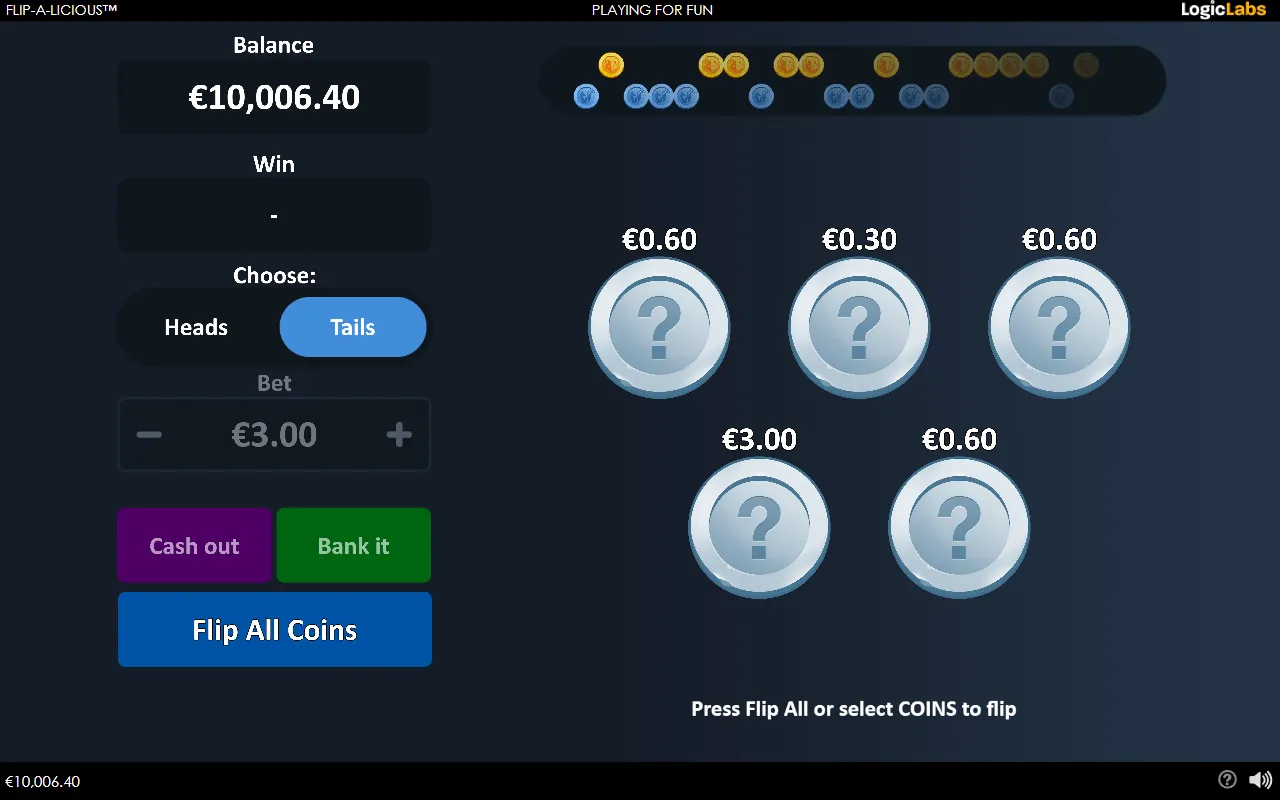
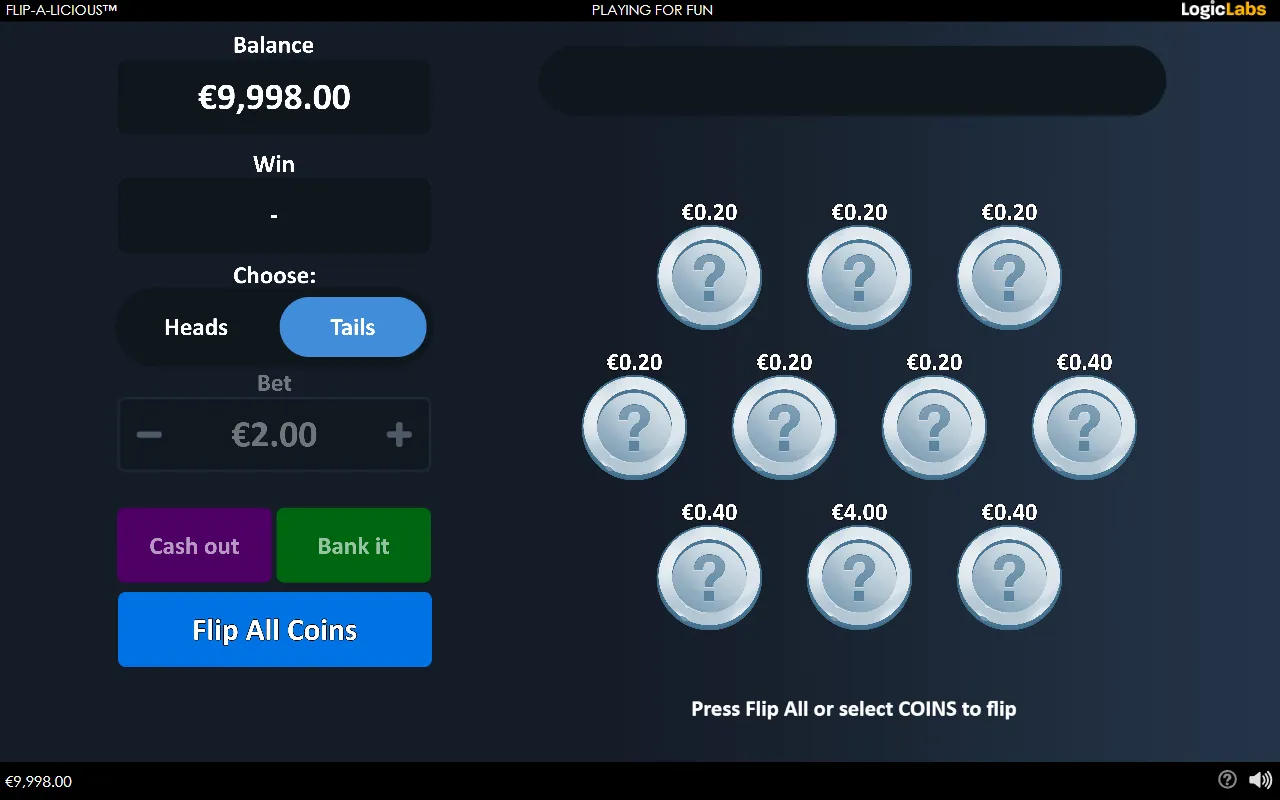
The game deals cash values to the coins from a published list ranging from a tenth of the bet up to 500x. Choosing fewer coins gives each one a somewhat better chance at a higher value, which is visibly true: a five-coin layout might carry a coin worth the entire stake, while a ten-coin board is mostly populated by the smallest fractions on the list. But the trick of the design is what the board looks like before you touch anything. A ten-coin deal will routinely sit there holding more than three times the money you paid for it. It looks like a massive head start, because a fair coin is about to wipe half of it out.
attrition before the climb
The doubling ladder is the whole pitch, but the first flip doesn’t double a thing. It is pure attrition. Surviving coins just keep their face value. Cashing out after a single flip means collecting those survivors, which usually limps back with anywhere from a fraction of the stake up to 1.5x. A bad flip on a five-coin board can easily wipe out the entire layout and leave you with nothing.
Only the second flip actually starts multiplying the money. Every survivor doubles, then doubles again on subsequent flips, while the casualties keep mounting. Pushing a ten-coin board through four consecutive flips might survive to pay out around 3x, or it could just drop you to zero. The only way up the ladder is also the road to nil.
There is a minor interface trap here that could cost a player. The Cash Out button is drawn in full colour before the first flip, but pressing it does nothing because the dealt values aren’t winnings yet. It doesn’t look dimmed, so hitting it on a fresh board just makes the release feel frozen.
the one decision you get
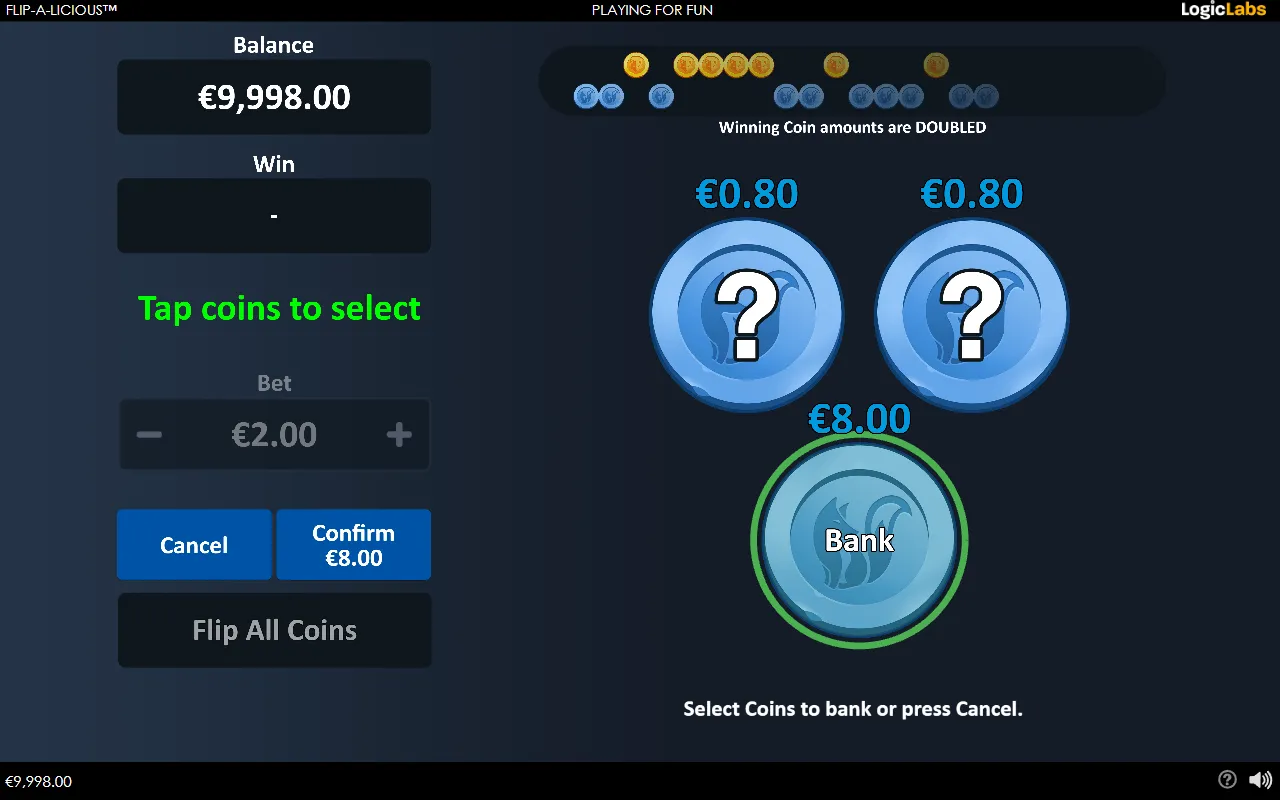
Between flips, Flip-a-Licious hands you a single tactical choice. You can lock any surviving coin into the win meter using the Bank It button, securing its current value no matter what happens next. The limitation is that you can’t bank the entire board. At least one coin has to remain in play to be flipped or cashed out.
It is a simple mechanic, but it works. If a layout dwindles to one decent 4x coin and a couple of worthless fractions, banking the big one and flipping the change secures the profit. Without that option, a bad toss on the final coins takes the 4x down with them. Playtech has used the name before on Red Wizard: Bank It Up, but there it was a feature buried inside a traditional layout. Here, it is the only time the player’s hand is on the outcome.
two billion to one
The math model pays a flat 96.00% regardless of how many coins you play, though a short run might drift a fraction of a percent higher on pure luck. The max win sits at 8,192x. That specific number is exactly what thirteen consecutive doublings produce. To hit it, the game has to deal the maximum 500x coin, and you have to win thirteen even-money flips in a row.
Playtech’s own count puts the odds of that run at one in two billion, though playing the single-coin option makes it twice as likely as the fifteen-coin game. It is an honest figure, but reaching it requires a miracle. A standard release like Grizzly Blitz hits its 13,373x top prize by stacking multipliers in a bonus round, while Flip-a-Licious gets there by never losing a coin toss. If you just want a layout with no reels that asks nothing of you at all, Sugar Plinko from BGaming pays a slightly better 96.51% return. This one strips the product down to a single question, and once you’ve watched a board get dealt and halved, you’ve seen everything it has to offer.