 Powered by SlotsReach.com
Dragon’s Pub makes winning the cheap part
Winning traditional payouts is not how you get paid here, and that is the entire point of the design. Landing a cluster of five card royals is worth a mere tenth of your stake. What a win actually does is light up the cells underneath it, and those lit cells are where the real money hides, but only if a Rainbow happens to be sitting on the grid when the spin settles. If it is not, your glowing squares go straight in the bin.
This is a 6×5 cluster game from Hacksaw Gaming, released on 27 August 2026. It runs at a 96.34% return with a hard ceiling of 10,000x your bet. The game sets its own volatility at three out of five, which feels surprisingly low for a slot that keeps nearly all of its heavy payouts locked inside one rare reveal.
Win to win, and why most wins pay nothing
Wins are built on clusters: five or more matching symbols connected anywhere on the grid, paying out in seven size bands up to thirteen or more. There is no left-to-right rule and no starting reel to worry about, meaning position does not matter at all while adjacency is everything. You can land four top hats, the best-paying symbol in the game, but if not one of them is touching another, the board pays nothing.
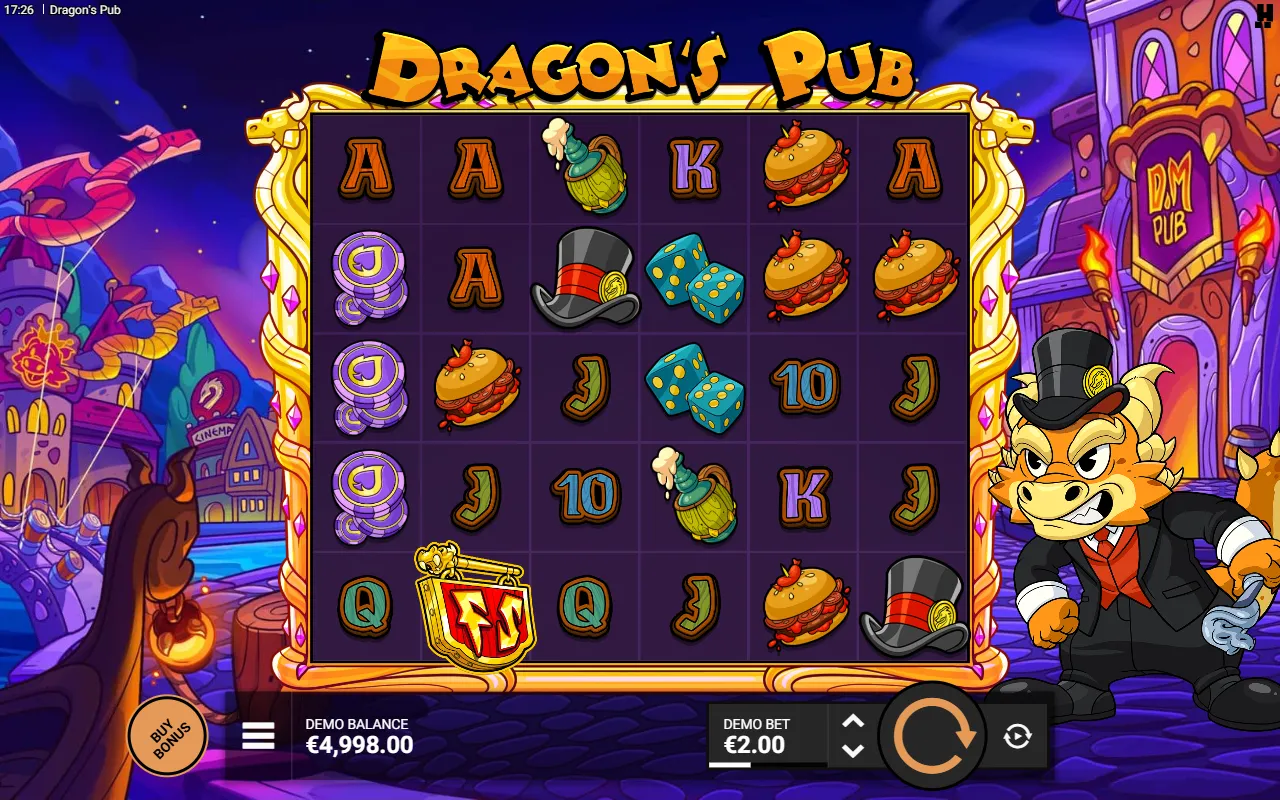
When a cluster does connect, two things happen. The first is a cascade, and it is noticeably harsher than your usual tumble mechanic. The game clears the winning cluster and every other copy of that symbol on the board, then drops new ones into the empty space. On one cascade during my session, a five-cell win triggered a clearance that wiped nine symbols off the board.
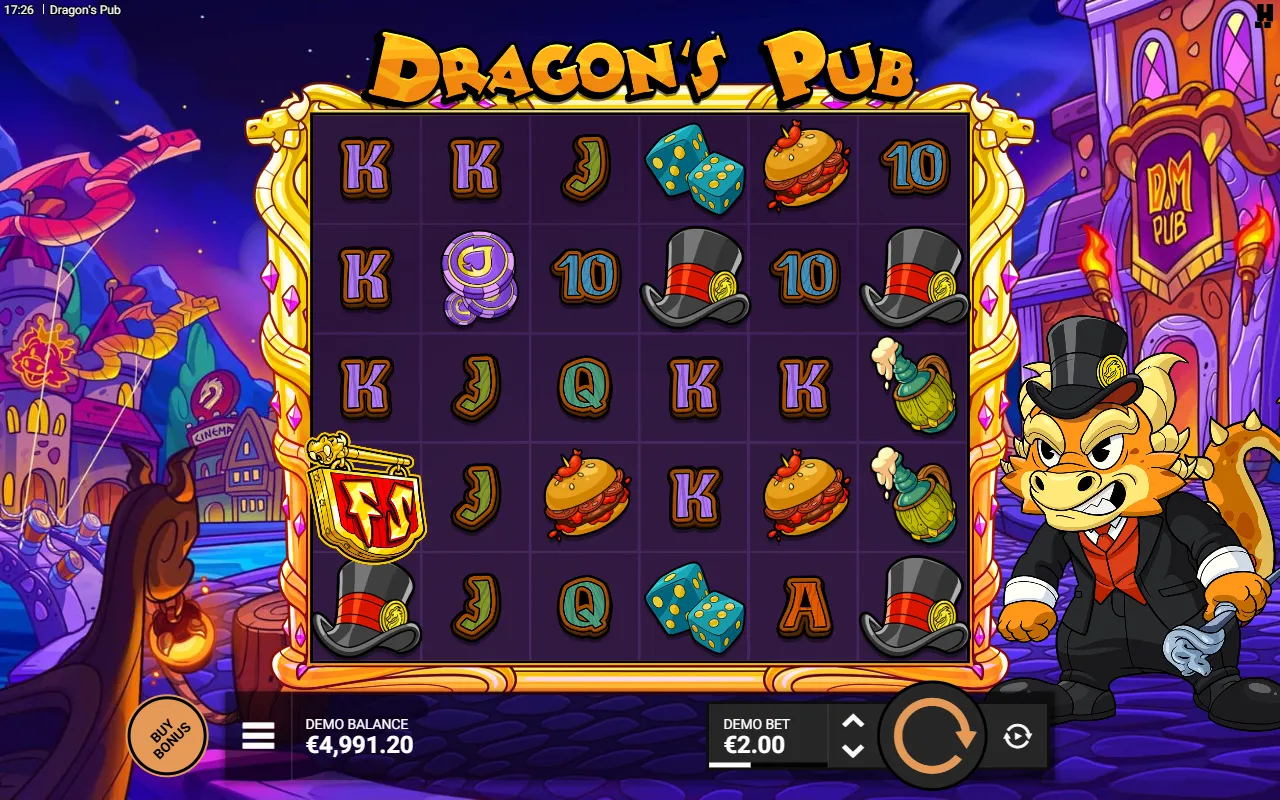
The second thing is the mechanic the entire game is built around. The cells behind the winning symbols stay lit as Marked Squares, though they are worth nothing on their own. If a Rainbow symbol is resting on the grid once the wins have finished paying, every Marked Square flips over to reveal a coin. These coins are flat cash multiples of your bet: 0.2x to 4x for bronze, 5x to 20x for silver, and 25x up to 500x for gold. Two rarer reveals sit behind them, a Pot of Gold that collects the value of every coin and pot on the board, and a four-leaf clover that multiplies adjacent coins and pots by up to 10x. Neither turned up in my round.
During the base game, these marks do not survive between spins. The ordinary outcome is a board littered with a block of glowing cells, no Rainbow anywhere near them, and the whole lot discarded when the reels come to a halt. Winning is simply what creates the marks; winning again is not what pays them.
Three free spins rounds off one scatter
The free spins shield is your only way into the bonus, acting as a ladder rather than a simple switch. Three scatters open Luck of the Dragon, awarding eight free spins where Marked Squares survive from spin to spin until a Rainbow cashes them in. Four scatters open All That Glitters Is Gold, giving you twelve spins where the marks survive the whole round even after being paid, meaning every activation pays out on a board that only ever grows. Five scatters open Treasure At the End of the Rainbow, twelve spins, persistent marks, a guaranteed Rainbow on every single spin, and all bronze coins taken out of the pool entirely.
Land below three shields, however, and you get nothing. A lone shield showed up three times in a handful of my base spins and was worth nothing every single time.
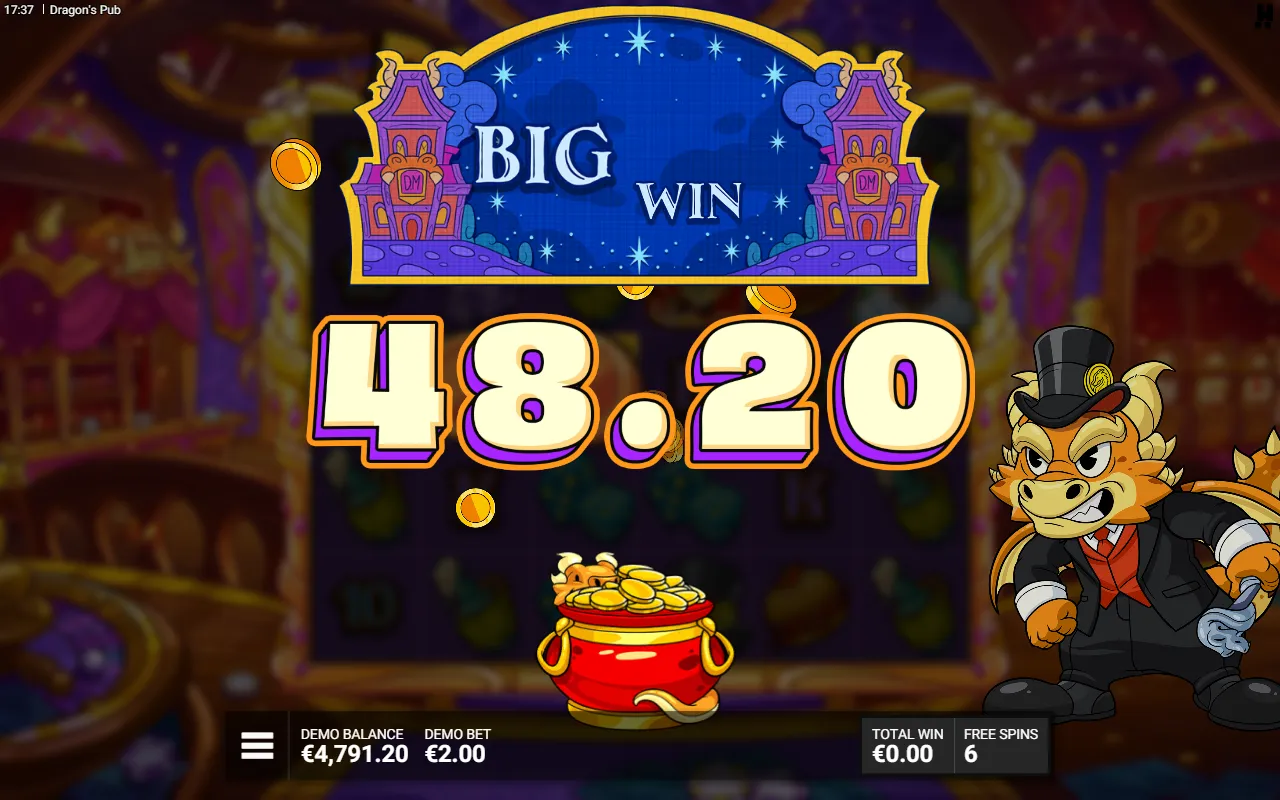
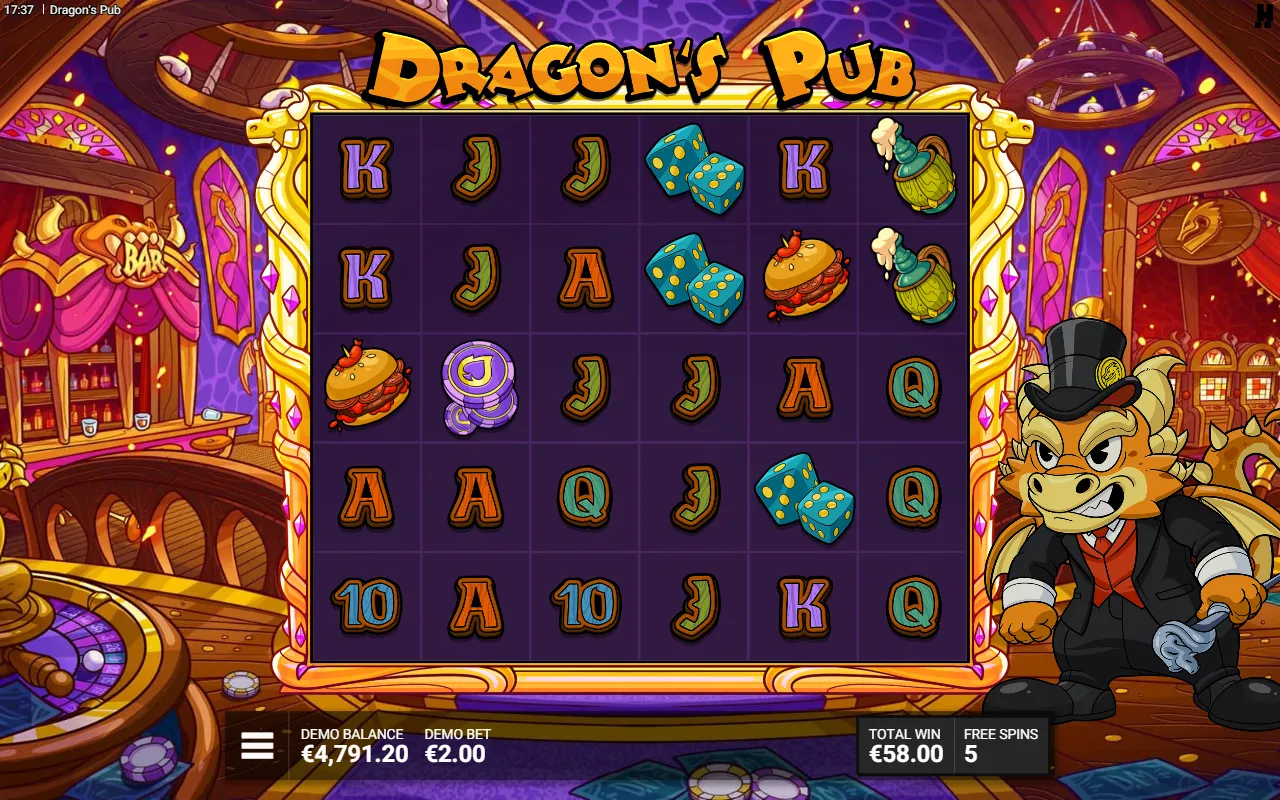
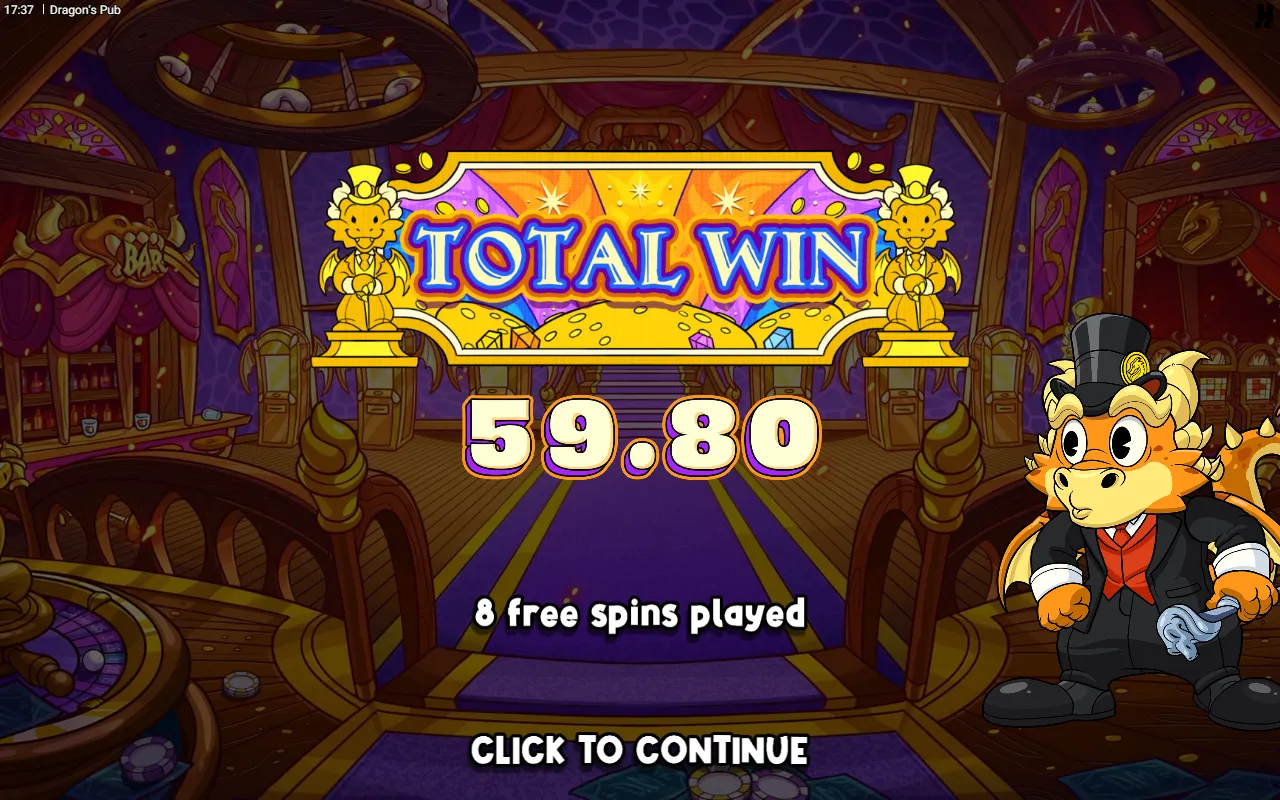
I bought into the cheapest round, Luck of the Dragon, for €200 at a €2 bet. Across the eight spins, a Rainbow landed exactly once, arriving on the second spin to cash in three Marked Squares. Those three squares settled at €58.00. Meanwhile, every traditional symbol cluster across all eight spins scraped together just €1.80 between them.
One thing worth knowing before you chase the top prize: reaching 10,000x ends the round immediately, and any free spins still owed to you are discarded. The base game and the three free spins modes can all get there, though the two FeatureSpins modifiers below cannot.
Four things to buy, two of which are not bonuses
The buy menu offers a few distinct ways to play. Bonushunt FeatureSpins costs 3x your bet and makes a bonus five times more likely to hit. Rainbow FeatureSpins costs 50x and guarantees a Rainbow lands. Neither of these is a traditional bonus round, both are charged on every single spin and stay switched on until you manually disable them. That makes the second option a rather peculiar offer: paying fifty times your stake, on every spin, just to delete the one major uncertainty the whole game runs on.
The two real rounds are Luck of the Dragon at 100x and All That Glitters Is Gold at 250x.
Then there are the returns, which run the wrong way round in the player’s favour. All That Glitters Is Gold pays back 96.4% and Luck of the Dragon 96.3%, against a base game of 96.34%, while the cheap 3x modifier is the worst thing on the menu at 96.28%. The most expensive button in the game actually has the best return in the game, meaning buying a round costs you essentially nothing in mathematical tax.
What you cannot buy is the absolute best feature. Treasure At the End of the Rainbow needs five scatters and appears nowhere in the menu at any price. Shelling out 250x only buys the second-best round in the game, and there is no route to the top tier except landing it naturally.
The pub, the dragon and a paytable that barely matters
The paytable consists of ten paying symbols split into four bands: five card royals at the bottom, moving up to a burger and a green keg, then teal dice and a stack of purple chips, topped off by a black top hat. Landing thirteen top hats, the largest cluster of the best symbol in the game, pays 100x. Compare that to a single gold coin on a Marked Square, which pays up to 500x. The symbols are not how this game reaches 10,000x, and they are not really trying to be.
The wild is the dragon’s face inside a burst of flame. It substitutes for everything in the paytable, which in a cluster game simply means it drags a group up into the next size band rather than paying anything out itself.
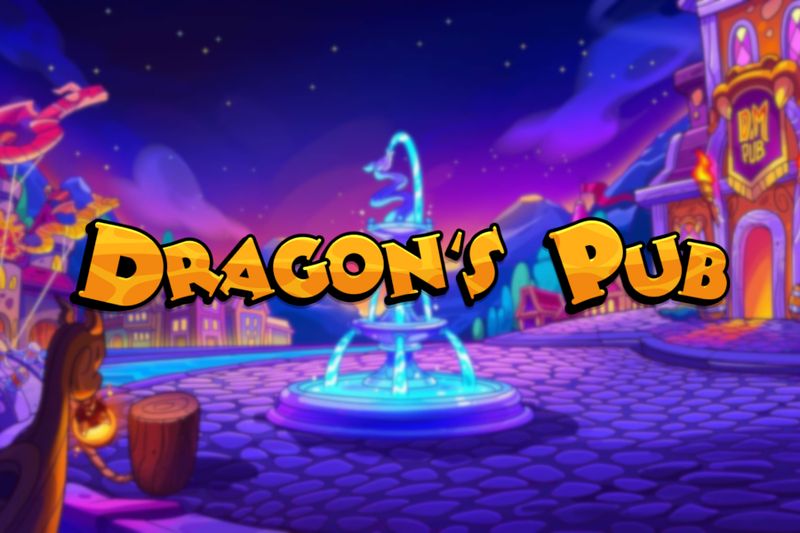
The art is the real reason to stay in the chair. It drops you into a cartoon back street at night, painted in deep violet and torchlight, with the pub glowing warmly on the right. The landlord is a small, round, orange dragon in a tail coat and black tie, complete with a top hat and a coin tucked in the band, who shifts his weight and puffs a cigar between spins. Triggering free spins moves the whole scene indoors into a rich palette of red and gold. It features thick outlines and absolutely no self-seriousness, holding up beautifully over an hour of play, something card royals normally do not help with. The only odd note is that the feature blurbs are written in mock French, flashing phrases like “C’est incroyable!” and “Oh la la!”. It is a quirk that belongs heavily to Hacksaw’s Le Bandit games and to absolutely nothing in this one.
Pros and Cons
Pros
- Buying does not cost you return. All That Glitters Is Gold at 250x pays back 96.4%, the highest figure in the game.
- The core mechanic is genuinely its own thing – wins create the money, and a separate symbol releases it.
- Three bonus tiers that differ on a rule that changes the maths, not just on how many spins you get.
- Art and animation are Hacksaw at full strength, and the free spins get their own indoor setting.
Cons
- In the base game every Marked Square is thrown away at the end of the spin, so most wins are decoration.
- The paytable tops out at 100x against a 10,000x ceiling. Symbol wins barely register.
- The best of the three bonus rounds cannot be bought at any price.
- Rainbow FeatureSpins charges 50x per spin, on every spin, until you remember to turn it off.
- Hitting the maximum win ends the round on the spot and discards any free spins you had left.
Verdict
My €200 round came back at €59.80, and €58.00 of that was from one Rainbow arriving on the second spin. A single symbol decided almost all of it.
That is Dragon’s Pub in one line. The clusters are just scaffolding, a single symbol decides whether a round actually pays, and the base game spends most of its spins assembling something it then throws in the bin. It is a good idea executed cruelly, though the pricing is honest enough that skipping the base game is not punished the way it usually is. Someone who wants to see the mechanic at its absolute best needs five scatters and the patience to wait for them, because the 250x button only ever buys the second-best version of it.