
 Powered by SlotsReach.com
The mushroom does all the work in Monkeys Wild Party
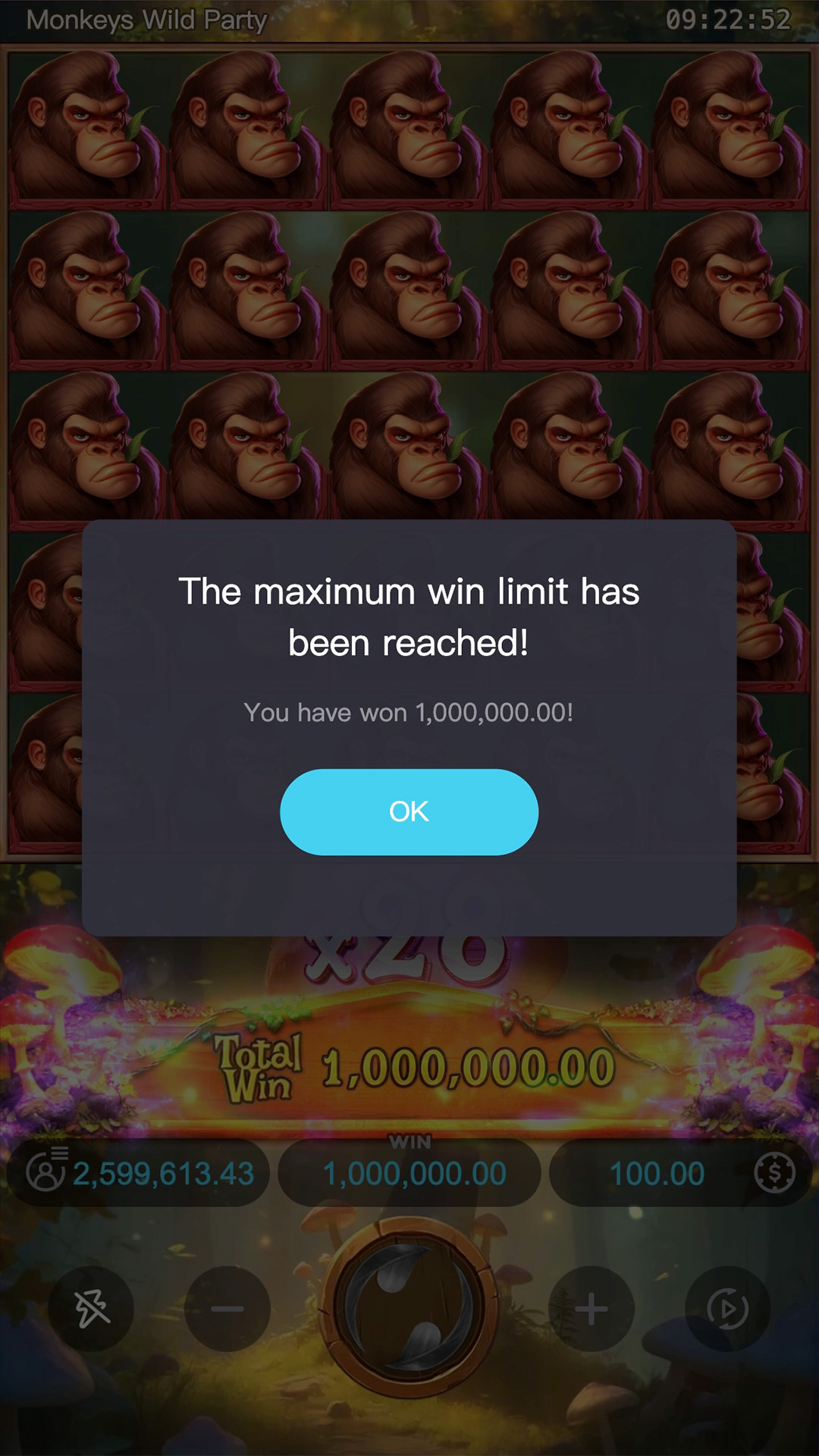
PG Soft has built an entire slot out of one simple but highly effective idea. A glowing mushroom lands somewhere on the grid, every monkey touching it loses its mind and turns wild, and every monkey touching one of those newly turned wilds transforms as well. The chain reaction runs as far as the monkeys reach. Monkeys Wild Party came out at the end of June 2026 on a 5×5 grid with cascades and adjacency wins, carrying a 96.75% RTP and a maximum win ceiling of 10,000x. PG Soft calls the volatility medium, which is true of the small change you pick up along the way, but a bit misleading when you consider where the real money actually sits.
How a win happens here
Payouts trigger when four or more matching symbols touch each other horizontally or vertically. It is not a traditional payline, not a megaway, and not the usual five-symbol cluster either. Four is the strict minimum, and diagonals do not count. That last detail changes how you read the grid more than you might expect. You can look at a screen crawling with one specific symbol and still win absolutely nothing because a stray strawberry is wedged between two vertical pairs of marmosets. Touching means edge to edge, and close does not cut it.
When you do connect, the winning symbols explode, the ones above drop into the gap, and the round tallies again until nothing more connects. It is a standard cascading system, executed cleanly and playing out quickly even without the turbo mode engaged.
The mushroom and the wild monkeys
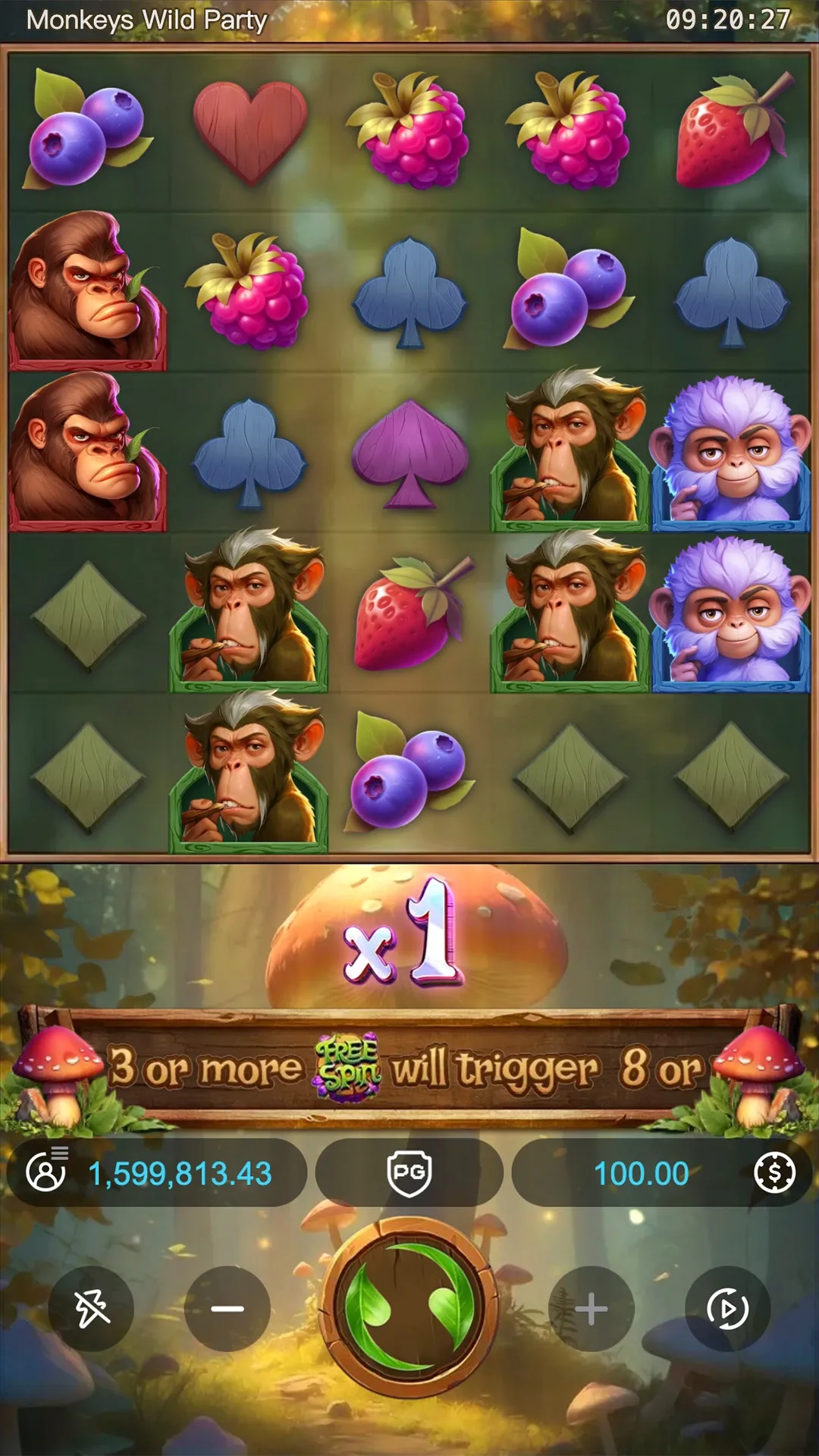
This mechanic is the entire reason to play the game. A Wild Mushroom can drop on any spin, and any Gorilla, Baboon, or Marmoset touching it becomes a Wild Monkey, a purple, spiral-eyed version of itself. Then the conversion spreads outward. Any monkey touching a freshly made Wild Monkey converts as well, creating a cascading wave across the board. One well-placed mushroom in a monkey-heavy corner can take over half the grid. In one standout base game spin, a single chain reaction paid 2,600.00 on a 100.00 stake while the multiplier was still sitting at just x2.
Two subtle details keep these chains alive longer than you would initially expect. Wild Monkeys that take part in a win come back as Wild Mushrooms in the next round rather than vanishing entirely, leaving a seed on the grid for the following cascade. Additionally, gold-plated symbols involved in a win turn wild on the next drop. Both mechanics are why a spin that looks completely finished will sometimes roll on for another two rounds.
The multiplier, and what the symbols are worth
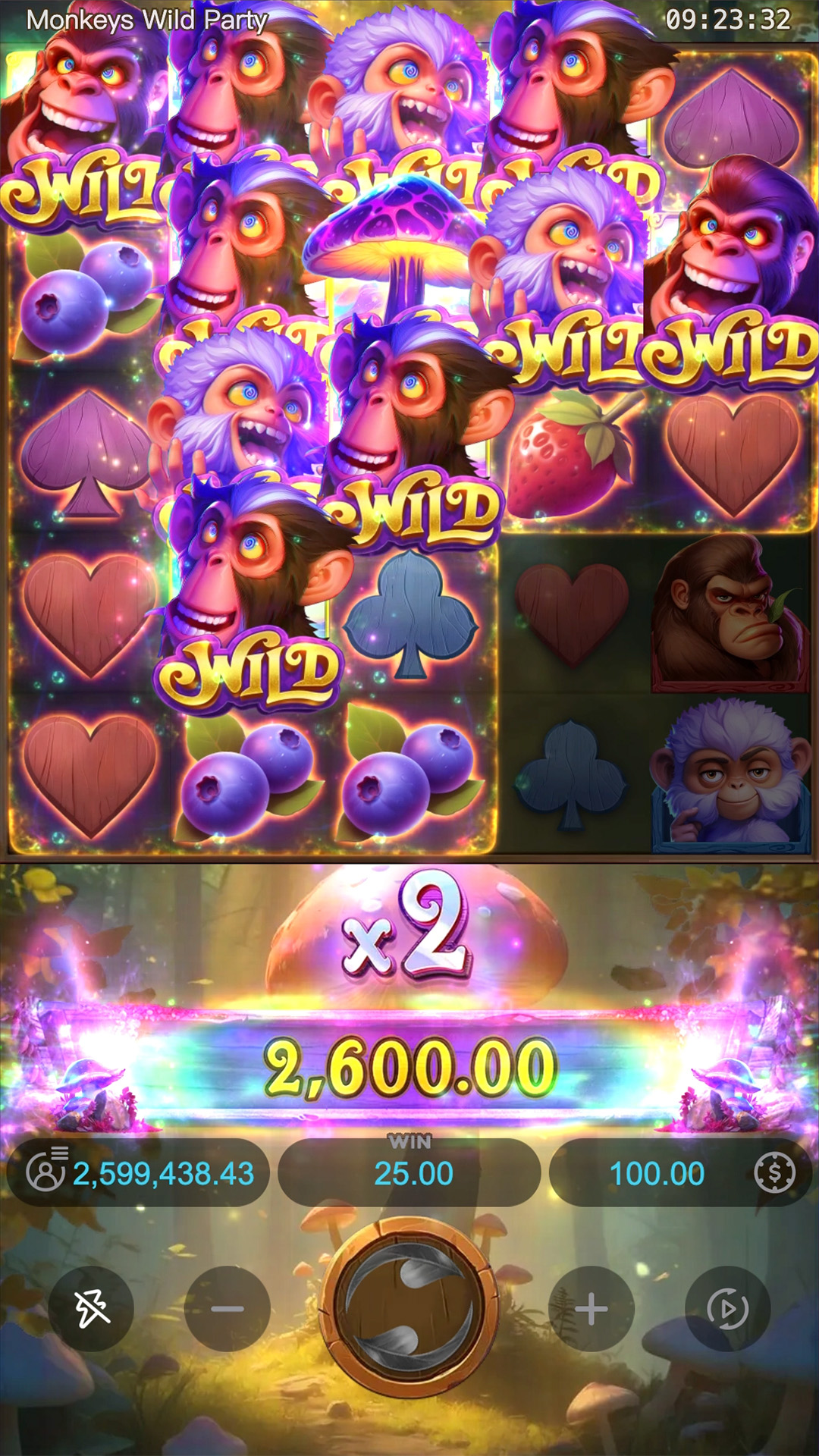
Every winning cascade bumps a multiplier by one. In the base game, it starts at x1 on every single spin and resets the moment that spin ends. Because of this, a one-cascade win is always at x1, and most spins never see x3.
That reset matters because the symbol values are incredibly meagre on their own. Landing four gorillas, the top symbol, paid 50.00 on a 100.00 stake, and that was only because the multiplier had already climbed to x5 across earlier cascades. At x1, that exact same cluster is worth a mere tenth of the bet.
Because of this, the base game runs purely on volume. The overall hit rate is 36.90%, meaning better than one spin in three returns something, though most of those somethings amount to pocket lint. The multiplier is not a bonus layered on top of the maths; it essentially is the maths.
Free spins, and the 10,000x
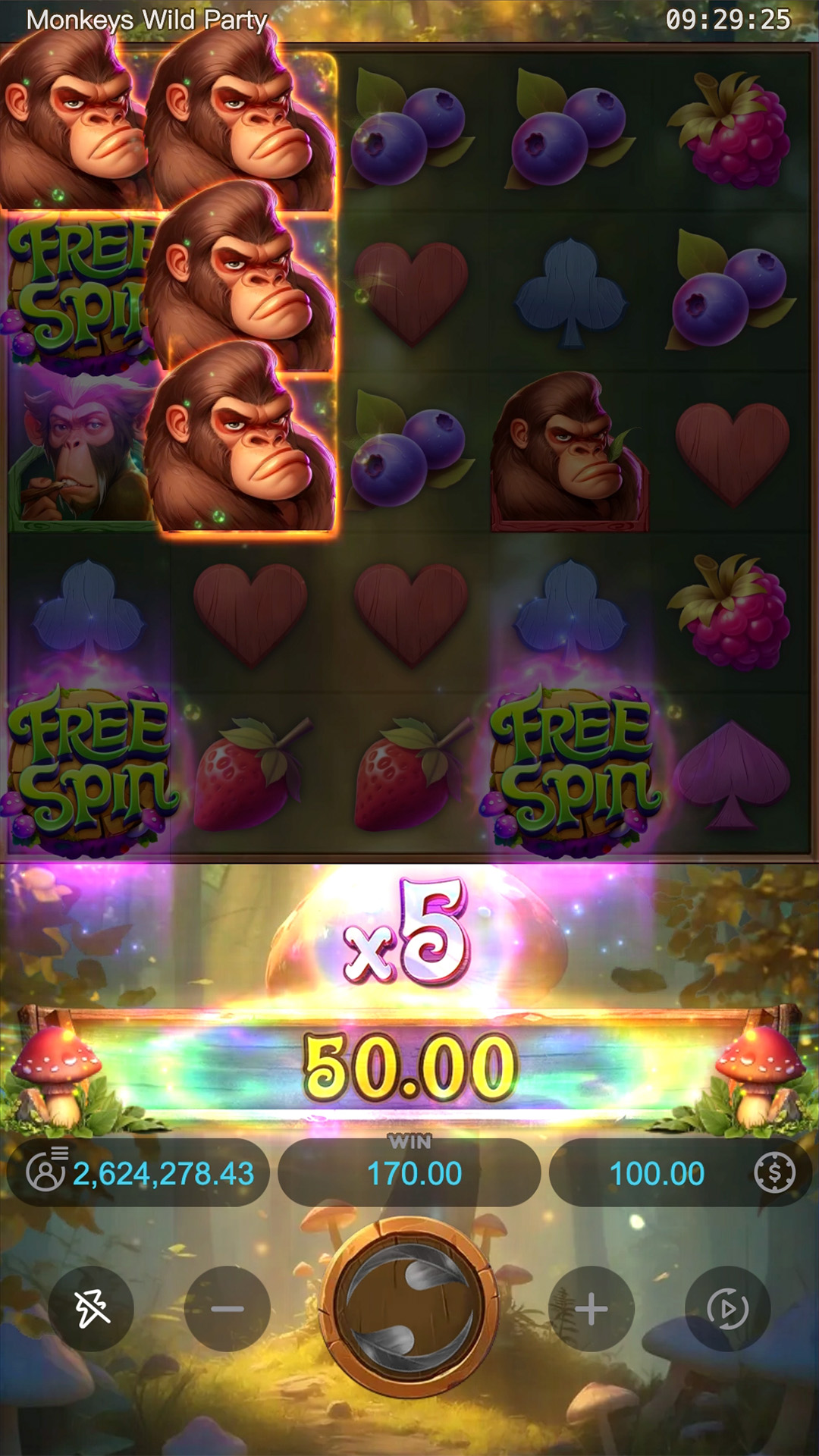
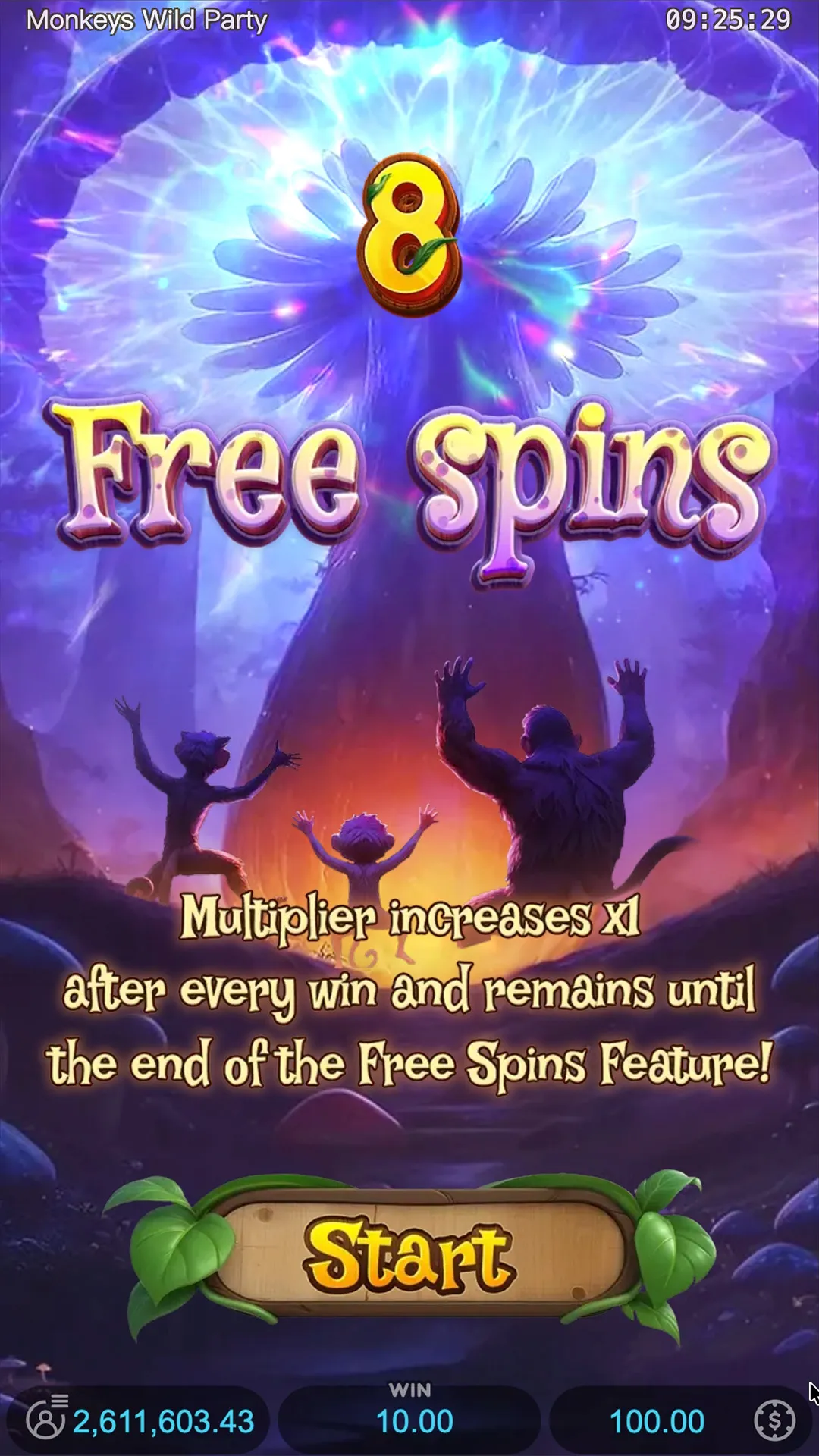
Landing three Free Spin symbols anywhere on the board awards eight free spins, and each extra scatter adds two more. Inside the bonus round, the multiplier works exactly as it does in the base game with one crucial change: it never resets. It climbs on every winning cascade and holds its ground until the final free spin is done.
You will also see +1 Spin symbols land during the round, each adding an extra spin to your tally. Getting three of these early in a round pushed the counter up to ten before the multiplier had even left x1. An eight-spin round with no extensions finished at 7,895.00 on a 100.00 stake, while a better run paid out 12,470.00. Those are the kinds of shapes you can expect to see, though they are still a long way short of the 10,000x cap.
The catch is how rarely any of this happens. Free Spin symbols turn up on about half a percent of spins, and roughly a quarter of the game’s entire return lives inside that round. A game that pays you small change every third spin while parking a quarter of its RTP behind a half-percent event is tough to call medium volatility.
This pacing is presumably why the buy feature exists, priced at a very reasonable 75x your stake. That is cheap by current standards, and for a bonus round where the multiplier compounds, it is the most logical way to experience what the game has to offer.
How it looks
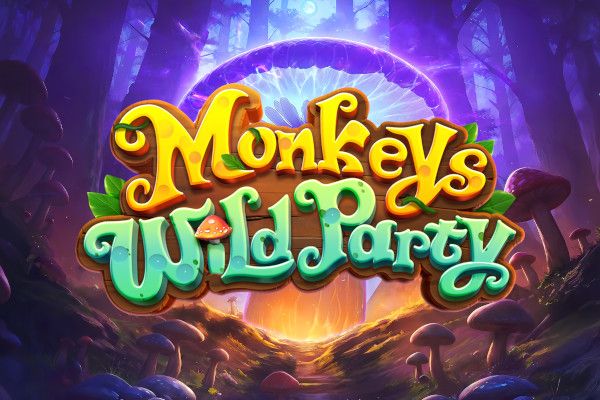
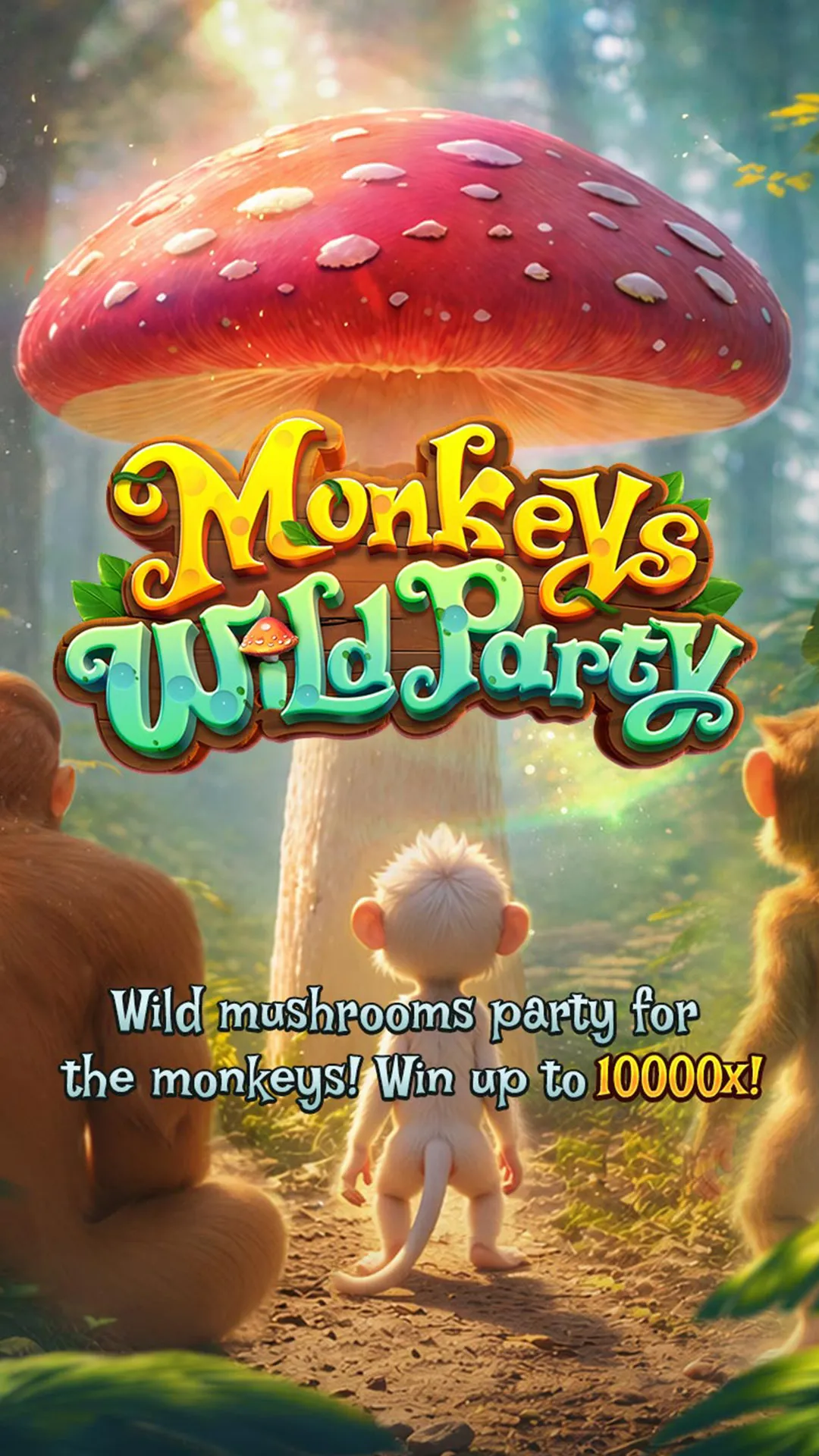
The loading splash screen is a photoreal render featuring actual-looking primates sitting in a shaft of forest light under an enormous fly agaric. Once you get to the reels, however, the art style shifts to a flat, painted cartoon. It feels like it should clash, but it somehow works because the central joke carries across both: the monkeys eat the mushroom, the monkeys go wild, and the wild ones sport swirling pinwheel eyes and manic grins. The Marmoset even sits there with a rolled smoke hanging out of his mouth. Nobody involved in the design was aiming for subtlety.
The low-paying symbols are painted card suits and glossy berries. They are obvious filler, but they sit on a dark forest strip that keeps the grid from looking ugly. Below the reels, the multiplier badge is large and highly legible, which sounds like a trivial detail until you suffer through a cascade game where it is not.
What works and what does not
What works
- The mushroom chain is a genuinely good mechanic that pays without needing the bonus to do the heavy lifting, a 2,600.00 win on a 100.00 stake at just x2 came straight out of the base game.
- The free-spins multiplier holding for the whole round, rather than resetting per spin, is exactly what separates the bonus from the base game.
- At 75x your stake, the bonus buy is priced well under what most studios currently charge.
- The four-symbol minimum keeps the grid feeling busy and active instead of dead.
What does not
- Symbol pays are incredibly thin. Four of the top symbol returns a tenth of your bet before the multiplier touches it.
- The base multiplier resetting every spin means it rarely gets anywhere meaningful.
- Locking a quarter of the RTP behind a half-percent trigger makes the medium volatility label feel highly optimistic.
- Structurally, there is nothing here PG Soft has not shipped before, including cascades, a rising multiplier, and a bonus that keeps it. The mushroom is the only genuinely new part.
Verdict
Watching a single mushroom chain pay 2,600.00 on a 100.00 stake with the multiplier still at x2 is the entire argument for playing this game. Everything around that moment is competent and familiar: the cascades are clean, the 96.75% RTP is solid, and the artwork is far better than it strictly needs to be. However, the base game between those mushroom drops is a slow drip of quarter-stake wins, and the free spins round that justifies the core design only shows up on half a percent of spins. If you want to watch the chain reaction at full stretch without grinding two hundred spins to see it, buying the bonus for 75x is honestly the only route into Monkeys Wild Party worth taking.